Predicting what is ahead for the global airline industry is always a challenge because its fortunes are frequently outside its control.

Just days into 2026, for example, the US intervention in Venezuela has layered more uncertainty on to an already messy geopolitical outlook. For an industry that relies on global standards and cooperation across borders, a further shift away from the rule of law towards ‘might is right’ in geopolitics will be an unwelcome one for many stakeholders.

But there are still a number of airline themes that are baked-in to the backdrop for the coming 12 months.

On the positive front, IATA projected in December that the coming 12 months would be the airline industry’s most profitable ever, even if margins remain tight. At the same time, Airline Business data for the first nine months of 2025 backs up IATA’s narrative that last year will have been among the industry’s most profitable. 

Underpinning profitability is strong demand for air travel, with premium cabins proving to be particularly lucrative for many network operators. And air cargo has been surprisingly resilient to the trade tensions that generated headlines earlier in 2025.

But there are headwinds.

At a global level, geopolitical risks remain high, while the sustainability challenge continues to present higher costs but few reasons for optimism regarding airlines’ ability to meet looming targets.

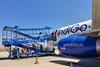
Airbus A320

Source: PradeepGaurs/Shutterstock

IndiGo had a tricky 2025

There is also no end in sight for the supply-chain challenges that continue to weigh on airline planning and sustainability efforts (they are, however, also keeping the industry from its worst impulses when it comes to overcapacity).

By region, there are a variety of factors in play.

In North America, eyes will be on the low-cost sector in the USA, including Spirit Airlines’ emergence from Chapter 11 and the fortunes of other operators as they continue to adjust to a tough operating backdrop. Moreover, there will be scrutiny of US tourism data amid some signs of weakening demand for travel to the country, not least since the administration of President Donald Trump began to issue travel bans and suggested visitors would be facing closer scrutiny of their social media postings before being allowed in.

In Europe – forecast by IATA to be the leading global profit generator in 2025 and 2026 – consolidation is a key theme, with TAP Air Portugal among the focus carriers in that regard. Notably, Turkish carriers Turkish Airlines and Pegasus were big movers in European consolidation last year. Beyond consolidation, the performance of the key transatlantic market will be watched closely by Europe’s big airline groups in particular amid geopolitical turmoil.

In Asia-Pacific, meanwhile, India’s biggest carriers will be aiming for better headlines after a 2025 that saw various challenges at biggest carrier IndiGo, including an operational meltdown towards the end of the year. Moreover, the crash of an Air India Boeing 787 just after Delhi had hosted the IATA AGM in June was one of the darkest moments of 2025 for the global industry. Reports in early 2026 suggest the Star Alliance carrier may be looking for a new chief executive as it seeks a ‘leadership reset’.

And China’s big carriers will be hoping for a better year financially, following signs that things were improving in that regard towards the end of 2025. The big three in particular – Air China, China Eastern Airlines and China Southern Airlines – have experienced a tricky emergence from the Covid-19 crisis in financial terms.

In Latin America, eyes will be on Brazil’s market – not least when the IATA AGM is held in Rio de Janeiro in June – and Azul’s emergence from Chapter 11 in particular, including any consolidation moves that might develop in the coming months. In the broader region – particularly including the Caribbean – eyes will be on the airspace and demand implications of any further military activity from the USA.

Finally, in Africa familiar challenges at the biggest operators continue to reflect a market that is not for the faint-hearted.

The industry’s most profitable year could still be one of its more challenging ones. 

Topics