
Latest analysis
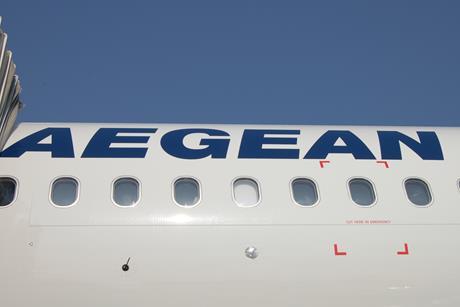
Steady Aegean cautious on Middle East impact
Like many airlines that have reported full year results in March, the outlook on the year ahead for Greek carrier Aegean Airlines was complicated by uncertainty surrounding recent events in the Middle East.
Strong air travel demand offsetting surging jet fuel prices for US carriers
US carriers report exceptionally strong demand, counterbalancing significant fuel cost increases driven by US and Israeli military operations in Iran that have pushed crude oil prices above $100 per barrel.
New chief works on securing fresh foundations for Air Baltic
It seems a cruel irony for an airline that could claim success in 2025 from expanding its wet-lease work for third parties, that Air Baltic should find its own financial performance last year hampered by costs attached to the need to bring in extra capacity to support its own scheduled operations.

Airline News Digest: 7-13 March 2026
Our regular rundown of the biggest airline stories from the past seven days.
Air Astana adapts again as Iran conflict adds to 2025 challenges
Kazakh carrier Air Astana Group points to improving yields, some encouraging signs on engine availability and its rapid response to the Iran conflict as reasons for optimism after a challenging 2025.
‘Resilient’ Cathay seeks further growth as fuel costs cloud horizon
Cathay Pacific Group is set to grow capacity 10% in 2026 as it looks to build on a third consecutive year of profit, but the impact of rising fuel costs from the crisis in the Middle East adds to a volatile backdrop.

Scheduling for scale: How smaller airlines can compete with giants
While some carriers are disadvantaged on size, they can still build simplified banks that support high-value connections, write Felix Ackermann of Lufthansa Consulting and former Lufthansa Consulting intern and current Masters student Ian Saravanan
Turkish Airlines flags Middle East uncertainty after bright start to 2025
As one of the first carriers to report financial results following the Israeli and US air strikes on Iran and subsequent retaliatory action on several Gulf states, plenty of attention was on Turkish Airlines for a perspective on how fresh troubles in the Middle may impact its business.
Interviews

Azul seeks to leave disruptions of early 2020s behind in post-bankruptcy era
Azul has emerged from a nine-month Chapter 11 bankruptcy process with a significantly reduced debt burden and fewer aircraft lease obligations, positioning the Brazilian carrier to withstand future macroeconomic shocks after years of challenges.

Mongolia’s Hunnu Air talks up bold network expansion plans with refreshed fleet
Few would have heard about Hunnu Air, but the Mongolian carrier is quietly growing its network reach, as it taps on opportunities gained from fleet modernisation efforts.

Why Emirates is adding an A350 service to Gatwick as it eyes further UK growth
Emirates will begin operating a fourth daily flight to Gatwick airport, bringing its Rolls-Royce Trent XWB-powered Airbus A350-900 jets to the West Sussex facility for the first time.

How Saudia is transforming its business while growing to meet tourism demand
Commercial chief Arved von zur Muehlen outlines moves to transform the legacy carrier in tandem with the opening up of the kingdom to tourists

Neves focuses on network and frequency as Etihad gets back on growth path
Etihad Airways chief executive Antonoaldo Neves is steering the Abu Dhabi carrier into a growth phase with a strategy focused on boosting frequencies rather than dots on the route map
Opinion
Scheduling for scale: How smaller airlines can compete with giants
While some carriers are disadvantaged on size, they can still build simplified banks that support high-value connections, write Felix Ackermann of Lufthansa Consulting and former Lufthansa Consulting intern and current Masters student Ian Saravanan

Branding the third space: How airlines are redefining the middle market
Airlines might have a lot to gain by offering elevated but attainable products to a willing customer base, argues Conran Design Group’s Ludwig Duran

Is the airline industry’s new-found ‘resilience’ actually just peak premium demand?
It might be the case that strong demand for the expensive seats among travel-hungry leisure passengers is a structural change in the post-Covid era. But there are clear risks in going all-in on that assumption

Is the airline industry at a point of inflection?
Some regions face a changed revenue environment amid slow GDP growth and stubborn inflation, writes CTAIRA analyst Chris Tarry
From making its debut as a magazine in 1985 through to its evolution into an online data and analysis tool, Airline Business has forged a reputation for providing high-quality, in-depth coverage of the airline sector’s strategic and economic drivers. Our trusted insight gives users a competitive edge in the global industry.