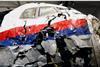















Judges of the European Court of Human Rights have unanimously ruled that Russia was responsible for the shooting down of a Malaysia Airlines Boeing 777-200ER over Ukraine, having failed to verify the target of a Buk surface-to-air missile.
The court’s Grand Chamber of 17 judges agreed with evidence suggesting the missile had been “intentionally fired” at flight MH17 from occupied Ukrainian territory, “most likely in the mistaken belief that it had been a military aircraft”.
Its 9 July ruling follows a four-part case. Three parts were brought by Ukraine, alleging human-rights violations by Russia since 2014, and the remaining one – specifically concerning MH17, shot down in July 2014 – was brought by the Netherlands.
The court says the “only reasonable conclusion” is that the missile was fired by a member of the Russian military crew of the Buk launcher vehicle or the armed separatists who had claimed Ukrainian territory as the so-called Donetsk People’s Republic.
“It was not necessary for the court to decide exactly who had fired the missile since Russia was responsible for the acts of the Russian armed forces and of the armed separatists,” the ruling says.

The court accepted Dutch government evidence that, acting alone, the Buk launcher vehicle “could not distinguish” between military and civil aircraft.
“Deploying a [launcher vehicle] in isolation would therefore amount to a breach of [international humanitarian law] unless other measures were taken to accurately identify the potential target,” it adds.
“The court found that no measures had been taken by Russia to accurately identify military targets, in breach of the principles of distinction and precautions.”
It state that the killing of civilians on board MH17 could not be described as a ‘lawful act of war’.
Deploying the vehicle in an area over which civil flights were still operating “clearly” presented an “immediate risk to life” about which Russia “had been, or ought to have been, aware”.
“Failure to take any steps, such as notifying Ukraine of the presence of the [vehicle] or closing the surrounding airspace, had shown a cavalier attitude to the lives of civilians at risk from its hostile activities in Ukraine and had, separately, breached the right to life,” the court rules.
Russia also violated the European Convention on Human Rights by conducting only “piecemeal” inquiries into the aircraft’s destruction, focused on aspects which suggested a lack of Russian responsibility.
“These inquiries had regularly resulted in the disclosure of information which had later shown to be, at best, inaccurate and, at worst, a complete fabrication,” the court states, adding that Russia obstructed a joint international investigation into the crash.