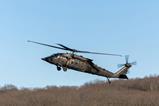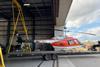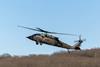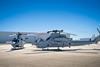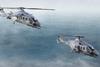














The US Army has begun the process of developing an overhaul plan for its large fleet of Sikorsky UH-60M Black Hawks, with an eye toward keeping the workhorse helicopter flying beyond 2050.
The service released a request for information (RFI) on 19 December seeking to assess the feasibility of creating a commercial production line to overhaul and upgrade existing UH-60Ms over a multi-year horizon.
Unlike a request for proposal (RFP), an RFI is a non-binding solicitation meant to prompt industry for ideas about a procurement project under consideration. Based on the results of the RFI, the government may move forward with an official RFP, which would include formal requirements and solicit competitive bid proposals.
The Black Hawk modernisation effort is being overseen by the army’s Utility Helicopters Project Office (UHPO).
In a draft statement of work issued with the RFI, that office says it is seeking the capability to upgrade between 12 and 24 UH-60Ms annually, plus an unspecified number of HH-60Ms – the US Army’s medical evacuation variant of the Black Hawk.
As part of the proposed overhaul process, the UHPO says each helicopter will be disassembled and undergo a detailed inspection. Any airframe components with defects or damage will be repaired or replaced. Corrosion and fatigue will also be addressed, with corrosion prevention measures applied.
“The statement of work is intentionally brief to emphasise what we believe to be the most essential tasks,” says Colonel Ryan Nesrsta, commander of the UHPO.
“While there may be opportunities to innovate in manufacturing, repair, and supply chain management this effort assumes solution development, integration, and testing is already complete,” he notes.
The army says it is open to expanding the programme to include other US military and civil government operators of H-60 aircraft, as well as overseas Black Hawk customers.
The US army currently operates some 2,300 Black Hawks, with negotiations underway with Sikorsky on an 11th multi-year production contract that would extend procurement of new UH-60Ms until 2032.
The current UH-60 production deal with Sikorsky, officially known Multi-Year Contract 10, covers deliveries of new aircraft through 2026.
Although the service has separately contracted Bell to develop the MV-75 tiltrotor that was once billed as a successor to the Black Hawk, it is now projected that both rotorcraft types will serve alongside one another.
The US Army took delivery of the first UH-60M in 2006, meaning the a significant portion of the fleet will be in need of an overhaul to reach the stated goal of operating beyond 2050.
In addition to a basic service-life extension, the army is also looking to modernise its UH-60s with new capabilities meant to increase survivability and combat effectiveness.
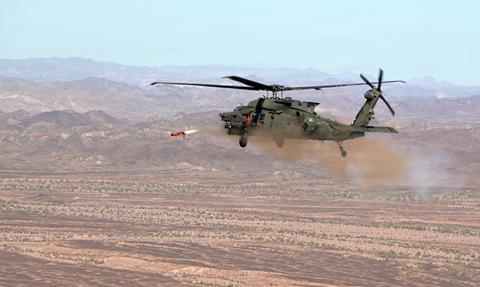
The service is particularly interested in adding the ability to deploy so-called “launched effects” while in flight.
This new class of still-under-development effectors are envisioned as small- to medium-sized uncrewed aerial systems able to provide battlefield reconnaissance and lethal strike options to UH-60M aviators, while keeping those crews further removed from hazards like ground-based air defences.
Several launched effect tests have already been conducted, using specially modified Black Hawks to deploy Anduril’s Altius UAS as a surrogate for a launched effects vehicle.