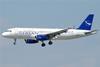
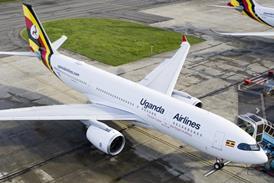












Syrian Arab Airlines is in line to receive $250 million in financing in order to acquire Airbus A320s, as part of a Qatari-backed project which includes redevelopment of Damascus airport.
Qatari construction specialist UCC Holding – part of the diverse Power International Holding conglomerate – is leading a five-company consortium which has provisionally agreed a $4 billion deal for foreign investment in the Syrian hub.
UCC’s partners include the US firm Assets Investments USA, and three Turkish parties: TAV Tepe Akfen, Cengiz Insaat, and Kalyon Insaat.
Between them the companies have previous experience on major airport programmes in Qatar, Libya, Turkey, Saudi Arabia, Egypt, Rwanda and other countries.

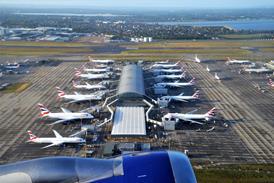
The Syrian investment project centres on rebuilding and expanding Damascus airport under a build-operate-transfer scheme.
UCC says the expansion will provide capacity for the airport eventually to handle up to 31 million passengers per year.
As part of the air transport redevelopment, it adds, Syrian Arab Airlines will have $250 million in financing to purchase up to 10 A320s.
This funding is “aimed at enhancing the fleet” and “increasing the competitiveness of the national carrier”, says UCC.
Damascus airport’s renovation will comprise five stages. In the first year capacity will be provided for 6 million annual passengers, before a second stage takes the figure to 16 million.
UCC states that the investment will support the Syrian effort to “restore its place on regional air routes”.
It adds that the airport – meeting the ICAO and IATA standards – will have up to 32 gates with modern airbridges, and become “one of the most modern and advanced airports in the region”. The project also involves developing a 50km main access road.
The strategic partnership has the “unified goal” of “rebuilding one of Syria’s most vital facilities in a way that reflects its future ambitions”, says UCC Holding chair Mohammad Moutaz Al-Khayyat.
UCC Holding president Ramez Al-Khayyat adds that Damascus airport will become a “model for advanced, smart transportation projects” in the region.
“It is a strategic bridge carrying Syria toward a future of recovery and prosperity,” he adds.
“We are investing in a sustainable development vision that enhances trade and tourism, connects Syria to the world at the highest standards, and stimulates economic growth and investment across all sectors.”