











A US federal judge has dismissed the Department of Justice’s (DOJ) case against Boeing on charges that it defrauded the Federal Aviation Administration (FAA) during certification of the 737 Max.
The DOJ had requested the dismissal in May after reaching a controversial non-prosecution agreement (NPA) with Boeing.
Judge Reed O’Connor, with the US District Court for the Northern District of Texas, approved the request, tossing the case despite doubting the NPA serves the public interest, and despite fervent opposition from relatives of some victims killed in two 737 Max crashes.
Victims’ attorneys “are correct that this agreement fails to secure the necessary accountability to ensure the safety of the flying public,” O’Connor writes in his 6 November order.
But O’Connor says he has no legal ability to override the prosecutor’s decision to drop the case.
“The court… does not have the authority to deny [the motion] because it disagrees with the government that dismissing the criminal information in this case is in the public interest.”
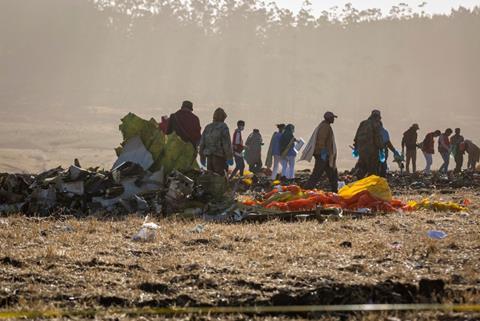
Paul Cassell, an attorney for crash victims’ relatives, says he intends to appeal, to “enforce the rights of the victims’ families and deny the government’s effort to simply drop these charges”.
Boeing says it is ”committed to honouring the obligations of our agreement with the Department of Justice. We are also committed to continuing the significant efforts we have made as a company to strengthen our safety, quality, and compliance programs.”
The DOJ in 2021 charged Boeing with defrauding the FAA during certification of the Max, alleging former employees failed to inform the regulator about critical aspects of the type’s Maneuvering Characteristics Augmentation System.
Boeing initially sidestepped prosecution by signing a deferred prosecution agreement under which it agreed to pay a $243.6 million criminal penalty, $1.77 billion in compensation to airlines and $500 million to victims’ beneficiaries.
But in 2024 the DOJ tore up that deal after a Boeing manufacturing defect caused the in-flight failure of a 737 Max 9’s mid-cabin door-plug.
Boeing then pleaded guilty under a settlement agreement that would have subjected it to an “independent compliance monitor”. But in December 2024 judge O’Connor threw out that deal, citing concerns related to the monitoring.
As a result, Boeing was set to go to trial, until the DOJ in May reached a fresh deal with Boeing – the NPA – and asked O’Connor to dismiss the case.
The NPA requires Boeing pay another $243.6 million criminal fine, another $444.5 million in compensation to victims’ beneficiaries, and $455 million to improve compliance.
Government lawyers said the deal provides a quicker and potentially better outcome than a trial, citing “litigation risk”.
Some victims’ relatives urged the judge to deny the dismissal on grounds it violates public interest. They argued the NPA does not subject Boeing to an independent compliance monitor and called the DOJ’s claim of “litigation risk” groundless because Boeing already pleaded guilty.
O’Connor agrees with those points.
“The NPA disregards the need for Boeing to be subject to independent monitoring,” his order says. “The government has a confession from Boeing… As such, the assertion that there is a legitimate risk that Boeing would be acquitted at a trial lacks support.”