















Senior management figures at Icelandic carrier Play have withdrawn a proposed plan to take over the company, after shareholders indicated a preference for the airline to remain listed on the stock exchange.
The plan had been put forward by a group of investors led by Play chief executive Einar Orn Olafsson and vice-chair Skuli Skulason, and would have involved seeking a delisting of shares from Nasdaq Iceland.
While the plans of the takeover group – using a special-purpose vehicle called BBL 212 – have been “well received”, the group says, discussions with shareholders have revealed that many favour Play’s continued listing.
It says that, as a result, the group has “decided to withdraw its plans to make a voluntary takeover offer” and will continue to back the company.
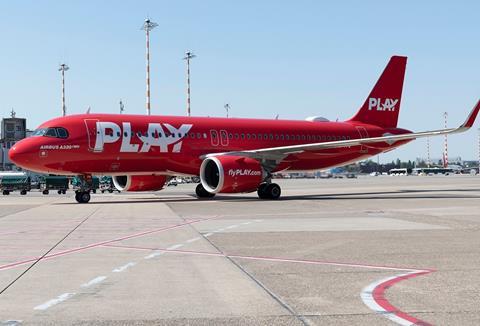
Play’s largest shareholders, as well as other investors, are participating in a IcKr2.4 billion ($19.7 million) convertible bond issue to support development including substantial changes to its business model.
The carrier has previously disclosed that it will dismantle its Icelandic hub, cease North American flights from October, and focus instead on sun and leisure routes.
Play will surrender its Icelandic air operator’s certificate in preference for using its Maltese AOC, allocating six of its 10 aircraft for wet-lease services and keeping four stationed in Iceland to serve popular destinations.
Holders of the two-year bonds will have the option to convert them to shares, and have purchase rights to a 30% share of its Fly Play Europe subsidiary.
Participation in the offering has been limited to a specific group of investors who committed to a minimum investment of €100,000 ($117,000).
“Instead of pursuing a takeover, the company has secured subscription commitments for convertible bonds,” says Olafsson. “This outcome is a clear endorsement of our plans and continued growth.”
He adds that the response to the revamped business model has been “encouraging”.
Olafsson states that a higher June load factor, despite fewer passengers than last year, is evidence of the “streamlined” operation producing results.
“By reducing excess capacity and focusing on targeted leisure routes, we are creating a stronger yield environment with fewer empty seats,” he says.
“This is a clear indication of better network planning and greater operational discipline.”