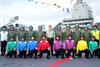
















As China prepares for its largest military parade marking 80 years since victory over Japan in the Second World War, the US Pacific Air Forces’ commander emphasises capability over messaging in strategic deterrence.
The US military’s top brass say Washington is not intimidated by an upcoming display of military hardware planned by the Chinese Communist Party.
Beijing will be the site of China’s largest ever military parade on 3 September, marking 80 years since the end of the Second World War, during which the country was occupied by Japan.
While the display is expected to include prominent examples of existing Chinese military equipment like the Chengdu J-20 fifth-generation fighter – first unveiled during a 2019 parade – of greater interest is the potential reveal of any new platforms Beijing has developed, such as next-generation fighters or uncrewed jets.
Whatever comes rolling through (or soaring over) the infamous Tiananmen Square will not affect the USA’s moves in the region, according to one of Washington’s top Pacific commanders.
“The takeaway for this is we are not deterred,” says General Kevin Schneider, commander of US Pacific Air Forces (PACAF).
Normally located in Honolulu, Hawaii, Schneider spoke on 2 September at the Mitchell Institute for Aerospace Studies in the Washington, DC area.
“We will continue to stay ahead of the challenges,” Schneider adds. “We will continue to find ways to advance our capabilities and to deal with potential adversary systems as they are developed and fielded.”
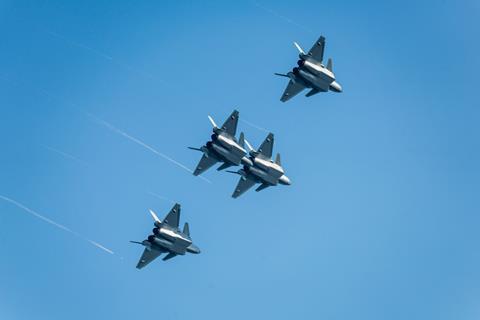
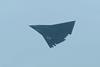
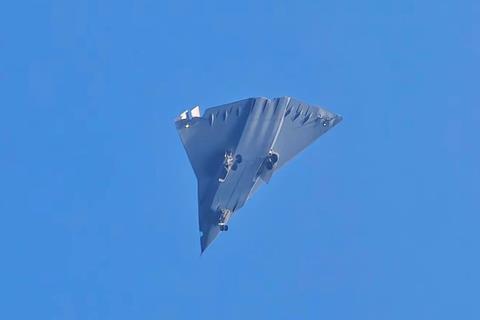
Such systems might include one of the multiple experimental combat jets repeatedly sighted over China throughout the past year, a new tailless uncrewed aircraft that has emerged in recent weeks, or even the long-anticipated Xian H-20 stealth bomber – seen as an answer to the US Air Force’s Northrop Grumman B-2s and developmental B-21.
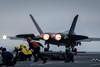
Another potential reveal might be the first confirmed launch of a fixed-wing fighter from China’s latest aircraft carrier, the CNS Fujian, which features an electromagnetic catapult system similar to the one used on the US Navy’s newest Ford-class flattops.
While such a display of military might could be interpreted as aggressive sabre rattling, Schneider says he thinks about China’s upcoming parade, along with similar events held in Russia and North Korea, more as an attempt at intimidating the USA from bolstering its commitment to the Indo-Pacific region.
“As nations like China, and North Korea, and Russia and others do these kind of events, there’s certainly a big focus on messaging,” he notes.
Citing an unnamed former chief of US Indo-Pacific Command, Schneider describes messaging as a variable in an imagined mathematical formula used to quantify the concept of military deterrence.
That formula, developed at Honolulu-based INDOPACOM, includes three factors: capability, willingness to act, and messaging; each multiplied together.
“If any of those factors are zero, then deterrence is zero,” Schneider says.
Big displays of military hardware fall under the category of messaging, with one interpretation being that they serve as a means of deterring adversary action by conspicuously displaying a nation’s martial prowess.
The USA itself notably hosted an unusual military parade in Washington at the behest of US President Donald Trump in July to mark the annual Independence Day holiday.
However, Schneider says capability is a far more important variable in the deterrence formula than messaging.
“Capability is the outsized factor,” he notes.
Authorities in Washington and Beijing appear to agree with that postulate.
Both sides are racing to stockpile long-range missiles and develop new technologies such as autonomous aircraft, quantum computing, and advanced aircraft in a new 21st Century arms race to secure dominance at sea and in the air, as well as the more recently contested spaces of cyberspace and outer space.
A 2024 Pentagon report described China’s People’s Liberation Army Air Force as ”quickly approaching US standards” in critical areas, such as the production and fielding of unmanned aerial systems. A separate Japanese research paper earlier this year found China’s air force is increasingly able to project power beyond the so-called First Island Chain using Xian H-6K bombers and long-range air-launched missiles.
Schneider says the key to winning that arms race (and thus achieving deterrence) is continuous improvement of allied positions and military capabilities.
“I maintain a high, high degree of optimism that we have been successful in doing that and [that] we will continue to be successful in finding ways to mitigate threats by others as they are developed,” Schneider says.
Particular areas of focus for the PACAF commander include penetrating anti-access/area denial defences and the ability to operate inside enemy weapons engagement zones.
The Chinese military parade is scheduled to begin on 3 September at 09:00 local time in Beijing.