












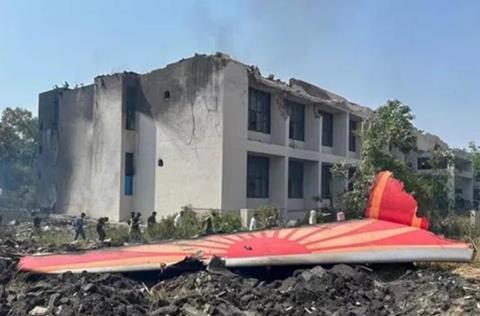
As investigators strive to determine the reason for a fuel cut-off switch activation which preceded the Air India Boeing 787 crash, the accident could revive calls for cockpit video to supplement cockpit-voice and flight-data recordings.
The inquiry will need to consider not only scenarios of inadvertent or deliberate pilot action, but also the possibility that neither pilot moved them, none of which is simple to establish from audio alone.
While the precise timing of the switches’ transition has not been disclosed, the inquiry indicates they moved separately but in quick succession some 3s after lift-off from Ahmedabad on 12 June.
This timing is particularly curious because, at this point, the flying pilot would typically have either both hands on the control column, or one on the thrust levers, while the monitoring pilot would be hands-off, watching parameters to confirm positive climb and waiting for the gear-up command.
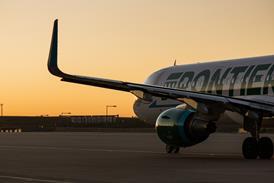
Absence of video that might reveal unexpected pilot actions can complicate investigations. The probe into an Atlas Air Boeing 767 freighter crash on descent to Houston in February 2019 had to explore, through use of simulators, whether a pilot could conceivably brush a go-around switch with their wristwatch if they were forced to reach behind retarded thrust levers for the flap or speedbrake controls.
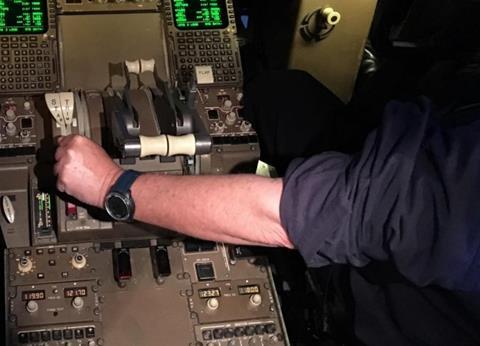
But neither pilot of the Air India 787 would normally have needed to reach behind the advanced thrust levers for the fuel switches or other controls during take-off.
With both pilots having apparently expressed confusion over the fuel cut-off, the possibility remains open that some other interaction with the switches occurred, perhaps involving a loose item in the cockpit.
This might appear unlikely, given that the switches are supposedly protected by a locking mechanism to prevent inadvertent movement. But the inquiry, based on a US FAA airworthiness bulletin, has suggested the switches might plausibly have been fitted with the lock disengaged.
At the point of rotation, the aircraft transitions from level to a nose-up pitch of around 15° for initial climb, the combination of vibration during the take-off roll and change in inclination could potentially dislodge an object which was otherwise secure while on the ground.
Numerous objects – pens, phones, headsets, documents, even a pilot’s cap – pose a potential threat if loose.
NASA’s voluntary reporting database on aircraft incidents features testimony from a 787 crew mentioning a falling clipboard during flight which struck one of the fuel cut-off switches, causing the engine to shut down.
Airbus has previously highlighted the risks of clutter and stressed the importance of a ‘clean cockpit’ philosophy in a 2015 edition of its in-house safety publication.
In a summary of incidents, it refers to placement of such items as books on the glare shield or pedestal. “These fall off and may operate some switches or push-buttons, such as a fuel lever being pushed off, or even de-select a radio frequency,” it states.
Without providing full details, it also mentions an incident in which a handheld tablet left on the throttle module during flight became jammed between the thrust levers and fuel levers, causing the fuel levers to shut off when the tablet was removed.
Airbus aircraft have previously been involved in notable serious incidents traced to loose objects including a jammed camera nudging the sidestick of a military A330 Voyager – sending the aircraft into a rapid descent – when the captain moved his seat forward.
Two A350s also suffered engine shutdowns when drinking cups containing liquids spilled onto the centre pedestal during flight.
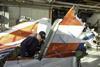
Investigators are still examining cockpit systems from the 787 and analysing flight-recorder information as part of the effort to understand the circumstances of the fuel cut-off.
Examination of the wreckage showed the fuel-control switches in the ‘run’ position. Although the evidence disclosed so far, including remarks from the crew, is consistent with the switches being physically moved to ‘cut-off’ and then back to ‘run’ to relight the engines, the inquiry will need to rule out the possibility of an electronic mishap and rogue signal.
If the cause proves difficult to determine, as with the Atlas 767 inquiry, the Air India accident could reinforce the case for cockpit video surveillance – resisted by pilot groups, over confidentiality concerns, but long sought by the National Transportation Safety Board.