











Rolls-Royce says it remains “on track” to deliver a 30% time-on-wing improvement for the Trent 1000 and Trent 7000 engine by the end of this year.
The manufacturer has been engaged in various initiatives to achieve an average 80% enhancement of time-on-wing across its modern Trent family by 2027.
Rolls-Royce says it has “either delivered or secured” more than half of this improvement target.
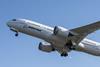
The company disclosed in a half-year briefing that it achieved certification, in June, of its high-pressure blade for the Trent 1000 TEN engine which powers the Boeing 787.
It states that this will “more than double” the time-on-wing of the engine, which has been the subject of various improvements to address durability issues.

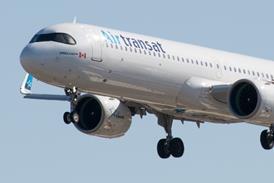
The blade is central to the first phase of a ‘durability enhancement package’ for the Trent 1000, similar to a package previously introduced on the Trent 7000 – which has a similar architecture – that powers the Airbus A330neo.
Both engines are also set to undergo a second phase of durability improvement which Rolls-Royce says will provide a further 30% increase in time-on-wing, on top of that achieved by the first phase.
”Some of our customers have been disappointed with Trent 1000 time-on-wing issues,” said chief executive Tufan Erginbilgic, speaking during a half-year briefing on 31 July.
”We have a big task force dealing with it. We’ve actually improved relations with customers.”
He says the first phase of the Trent 1000 durability package will quell the “noise” over time-on-wing. “Because, by the end of this year, we will have an engine [that’s] very competitive.”
Erginbilgic says that, depending on how the engine is operated, the company expects “four to six years’ time-on-wing relative to where we’ve been”.
Rolls-Royce delivered fewer Trent 1000 and Trent 7000 engines over the first half, a combined total of 53 compared with 61 in the same period last year.
Erginbilgic says the company has also “hit milestones” on efforts to enhance the Trent XWB-84 which powers the Airbus A350-900.
The company is analysing operating data to raise cycle limits of critical parts which, combined with a modified compressor blade, will increase time-on-wing for the engine.
This work is “not completely done” but is “making great progress”, says Erginbilgic.
Of the various upgrade projects, he adds, the “remaining big one” is the time-on-wing improvment for the A350-1000’s Trent XWB-97 when operating in non-benign, as well as favourable, environments.