














Thales will incorporate higher levels of automation and connectivity on the next-generation avionics suite it will offer to Airbus for the airframer’s A320neo replacement programme but believes it will be too soon for a fully automated or single-pilot cockpit.
Tentatively scheduled to arrive in the second half of the 2030s, the Next Generation Single Aisle (NGSA) is likely to feature a host of new technologies, including ultra-efficient engines, long, slender composite wings and advanced materials.
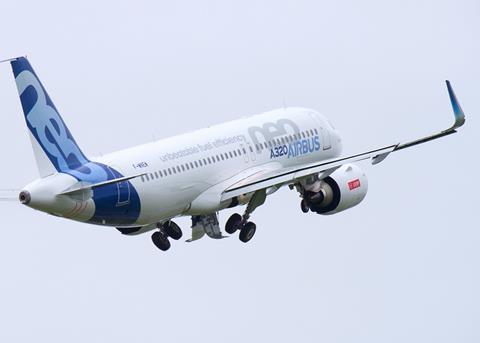
For its part, Thales, which supplies the integrated modular avionics on the A320neo, sees flightcrew being offered a high degree of inbuilt assistance by the NGSA.
“That airplane will incorporate a lot more help for the pilots through automation or recommendation so they are assisted at any moment of the flight – whether it is a normal phase or if there are issues,” says Yannick Assouad, executive vice-president of the French’s firm’s avionics business.
In case of a system’s failure, Assouad says a “much more sophisticated” flight-management system will be able to “recommend an action to the pilots”.
However, this will not be automatically deployed: “The pilot will still be in the loop – they will decide the next step. It will have much more intelligence to help the pilot address any event onboard the airplane.
“The next system will recommend a course of action – whether they follow it or not will be their decision. There will be much more help, including the possibility of asking the airplane to do it automatically.”
To achieve that, the aircraft also “needs to be connected – but connected in a safe manner, a cyber-secure manner”, she adds.
This will provide both real-time data, such as meteorological conditions, and a direct link with air traffic management “to optimise flight routes” – boosting both operational and environmental performance.
Despite the higher degree of automation or assistance, Assouad thinks it will be some time before an aircraft is fully automated, due to issues like acceptance from pilots and the public, as well as regulatory hurdles.
And although the next generation of aircraft “will be able to easily evolve to a single-pilot operation”, she does not see this being required at service entry.
Additionally, the NGSA will boast greater computing power and better sensors – including those like millimetre-wave radar that can offer new capabilities, such as enhancing vision in degraded conditions.
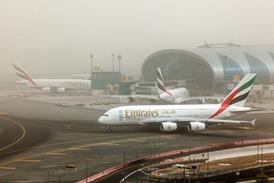
Assouad spoke to FlightGlobal at this week’s Dubai air show ,where Thales signed several pacts with local companies and agencies to advance air traffic management solutions in the United Arab Emirates.