













Relatives of Boeing 737 Max crash victims urged a federal judge on 3 September to reject a non-prosecution agreement (NPA) that would end the Department of Justice’s (DOJ) criminal fraud case against Boeing.
The decision whether to approve the NPA – and therefore close the DOJ’s long-running fraud prosecution – lies with federal Judge Reed O’Connor with US District Court for the Northern District of Texas.
The DOJ in May asked O’Connor to dismiss the case because the government and Boeing struck the NPA. The deal required that the company admit to participating in a “conspiracy to obstruct and impede the lawful operation of the” FAA during 737 Max certification programme.
The NPA also required that Boeing submit to a compliance monitoring programme and pay $1.1 billion.
But during a 3 September court hearing, 12 relatives of crash victims, and their attorney Paul Cassell, asked the judge to deny the DOJ’s request and to appoint a special prosecutor to continue the case, Cassell tells FlightGlobal.
Special prosecutors are typically assigned to handle cases involving possible conflicts of interest by the DOJ.
Cassell argues that the DOJ and Boeing sidestepped judicial process by contractually agreeing to a non-prosecution deal before the judge approved such a move.
“The court should not participate in an unprecedented arrangement that allows prosecutors to negotiate around judicial review,” Cassell says.
He also raised concern about the NPA’s provision allowing a consultant to act as Boeing’s compliance monitor.
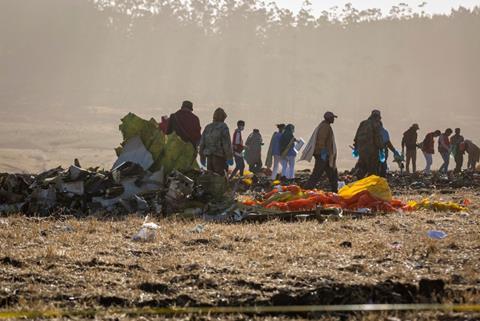
The DOJ charged Boeing with fraud in 2021. The case focused on the company’s representations about the Max’s Maneuvering Characteristics Augmentation. Malfunctions of that system contributed to two deadly crashes in 2019 and 2020 that killed all 346 people on both jets.
Boeing and the DOJ initially reached a deferred prosecution agreement that would have let the company sidestep prosecution. But judge O’Connor scrapped that deal last year in response to ongoing Boeing quality lapses.
Boeing then last year agreed to plead guilty under a different deal with the DOJ. But O’Connor rejected that arrangement owing to concern about a compliance-monitoring programme.
The case had seemed headed for trial until May, when the DOJ said it and Boeing signed the NPA.
Government lawyers say the NPA “is in the public interest” because it will provide “tangible and significant benefits to the public immediately that further prosecution may not provide”.