














Boeing has or will soon pay $445 million as part of a non-prosecution agreement related to fraud charges filed by the US Department of Justice (DOJ), though the case remains legally unsettled and continues working through federal court.
Boeing revealed the charge on 29 July when reporting its second-quarter financial results, saying the $445 million hit results “from the May 2025 non-prosecution agreement with the US Department of Justice”.
A financial analyst says Boeing’s disclosure of the charge means it has already or intends soon to make the payment.
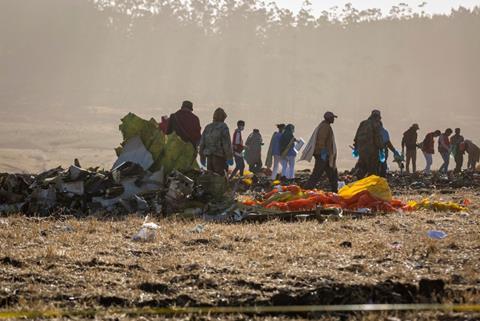
The DOJ’s case against Boeing has been ongoing since 2021, when the government charged the company with defrauding the Federal Aviation Administration while pursuing certification of the 737 Max.
Boeing several times seemed close to settling the case – first through a deferred-prosecution agreement and then via a negotiated guilty plea – but those efforts fell through.
In May, Boeing and the DOJ reached the non-prosecution agreement that government attorneys described as securing “meaning accountability” and settling a case with an outcome that would “otherwise be uncertain”.
In revealing the agreement, the DOJ also asked a US judge to dismiss the case.
The deal calls for Boeing to pay $444.5 million into a “crash-victim beneficiaries trust”, to invest $455 million in efforts to strengthen “compliance, safety and quality” and to pay a $243.6 million fine.
It is unclear which of those buckets Boeing’s second-quarter $445 million charge applies to.
Lawyers representing crash-victim families have blasted the non-prosecution agreement for failing to recognise “the fact that Boeing criminally caused the deaths of crash victims”, attorneys say in court papers.
They have also railed against Boeing and the DOJ for reaching a “binding” non-prosecution agreement before a federal judge has agreed to dismiss the case, warning that the DOJ might be contractually prohibited from continuing the case even if the judge denies motions to dismiss it.
Those attorneys have asked judge Reed O’Connor with US District Court for the Northern District of Texas to reject the dismissal and to appoint a special prosector to continue the case.
Judge O’Connor has scheduled a 3 September hearing to consider the motion to dismiss.