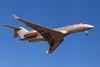












VistaJet is to become the first international private jet company to operate domestically in Saudi Arabia.

Credit Santi Rodriguez Shutterstock

Source: Santi Rodriguez/Shutterstock

Opening its aviation sector to private aviation operators such as VistaJet is key to the kingdom’s ambition to diversify its economy by attracting investment and tourists

The General Authority of Civil Aviation (GACA) said on 20 August that the Maltese-headquartered operator had been granted permission to offer charter services within the kingdom.

It follows GACA’s removal of cabotage restrictions on charter flights, announced earlier this year and which came into force on 1 May. GACA said at the time that “several” operators had applied for permits to fly within the kingdom.

With high numbers of ultra-wealthy individuals including in its extended royal family, Saudi Arabia has long been an attractive market for business aviation, but so far foreign operators have only been permitted to fly passengers in and out of the country.

The move is part of a wider strategy to diversify the country’s economy from its reliance on energy exports by attracting inward investment and high-end tourists.

Awad Alsulami, GACA’s executive vice-president for economic policies and logistics services, says: “Authorising VistaJet as the first international private jet operator for domestic operations is a milestone in enhancing the general aviation market in Saudi Arabia.

”This step will foster greater competition, stimulate sector growth, and raise the quality of services for private aviation customers in the kingdom and across the region.”

Established in 2004, VistaJet operates its roughly 270-strong all-Bombardier fleet on a Maltese air operator’s certificate, but has an office in Dubai. Its sister company within parent group Vista Global, XO, is a membership service offering access to charter flights mostly in the USA.

VistaJet employs a membership model where customers buy packages of flight time. It claims to have been serving the Saudi market for more than 15 years and describes it as a “key growth market”. It says its membership programme within the kingdom grew by 32% year-on-year in the first six months of 2025.

Saudi Arabia sees expanding its aviation sector – both private and commercial – as crucial to the growth of its economy. Earlier this year, it granted a partnership led by United Arab Emirates-based Air Arabia the right to establish a low-cost carrier at Dammam.

In 2023, its rulers announced the launch of Riyadh Air as its second flag-carrier after Saudia, with a hub at the capital’s King Khalid International Airport and ambitions to become a major international airline. Riyadh Air has since placed orders for around 125 Airbus and Boeing aircraft.