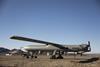



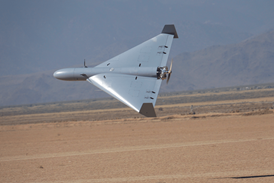














The British Army’s Watchkeeper Mk1 uncrewed air system (UAS) could remain in service until 2027, despite the government announcing last autumn that it would be withdrawn from early 2025.
Revealing the move in November as part of a broader cost-saving initiative that detailed the early retirement of multiple aircraft, defence secretary John Healey said Watchkeeper was “a 14-year-old army drone which technology has overtaken”.

In an accompanying written statement, he said Watchkeeper “will be retired from service from March 2025”, following which, the army “will rapidly switch to a new advanced capability”.
Although the Ministry of Defence (MoD) has begun the procurement of a successor system under its Project Corvus initiative, current timelines indicate a winning bidder will not be contracted until 1 May 2026 at the earliest.
Procurement notices published by the MoD have disclosed the ambition of a “stretch target” to achieve a “minimum deployable capability” during the current calendar year. But with the tender currently tracking towards a 31 October launch, it seems unlikely that will be met.
Faced with the prospect of a capability gap, and with Watchkeeper systems currently on several overseas deployments, the British Army in May began tendering for the “provision of In Barrack Engineering Support (IBES)” for the platform.
This would “cover the deployment of technicians to provide maintenance services on Watchkeeper” and would run from this summer until 31 March 2026, with a possible extension for another 12 months.
Worth up to £2.3 million ($3.1 million), the contract had an estimated start date of 1 July, albeit there has been no subsequent update to the government’s procurement website.
The MoD declines to comment, but FlightGlobal understands that with several of the Watchkeeper platforms remaining in service, the support package is required to ensure the army can “maintain defence outputs until its full retirement”.
It is unclear how many of the 46 surviving examples of the Watchkeeper remain in service.
A Thales UK-led development of Elbit Systems’ Hermes 450 surveillance platform, several of the air vehicles have been lost to crashes in both its testing and operational phases.
Under Project Corvus, the army is seeking a new UAS “to deliver the Land Tactical Deep Find (LTDF) 24h persistent surveillance requirement”.
Worth up to £156 million, the MoD expects to award the initial five-year contract – with an option to extend for another five years – to an OEM or prime contractor “who will be required to provide the equipment and support to meet the army’s requirements.
“The solution must be of a high readiness level, be technologically agile, and capable of undergoing spiral development in future years to meet continuously evolving requirements,” the procurement notice states.