













Contaminated hydraulic fluid in a Lockheed Martin F-35A’s landing gear struts ultimately led to the loss of the aircraft in Alaska.
The accident occurred on 28 January after the US Air Force (USAF) F-35A (19-5535) took off from Eielson AFB, Alaska at midday.
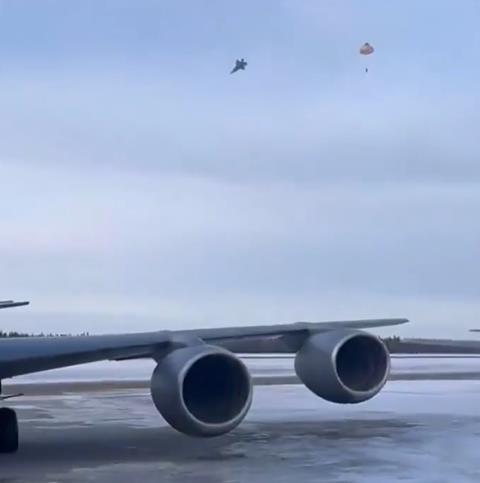
After taking off, the jet’s nose landing gear failed to retract properly because of hydraulic fluid that was contaminated with water that froze, according to a USAF investigation.
The nose gear was canted 17° to the left as the pilot held for 50min while USAF ground personnel discussed the issue with Lockheed engineers.
The aircraft then conducted two touch-and-go landings to attempt to straighten out the nose landing gear. However, ice had already formed in both the left and right main landing gear struts due to the contaminated hydraulic fluid and extreme cold temperatures.
After the second touch-and-go, with ice preventing all landing gear struts from fully extending, the jet’s weight-on-wheels sensors incorrectly indicated the jet was on the ground, causing the aircraft to transition to “on ground” flight control law.
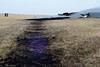
Because the jet was actually airborne when it entered “on ground” mode, it became uncontrollable. The pilot ejected safely and the aircraft crashed next to the runway.
The investigation found that the hydraulic barrel used to service the aircraft contained approximately one-third water. The probe found “significant lapses” in procedures and record keeping around hydraulic barrels within the aircraft’s unit, the 355th Fighter Squadron.
The probe assessed the value of the loss at $197 million.