














Royal Thai Air Force deploys F-16s and Gripens in precision strikes against Cambodian targets as authorities implement no-fly zones for unmanned aircraft in border regions.

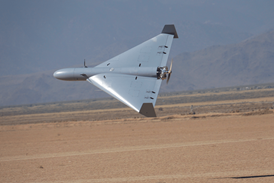
Thailand has banned the flight of drones in border regions with Cambodia, as fighting between the two Southeast Asian nations continues.

The ban covers 14 areas along the country’s border with Cambodia, where clashes started last week.

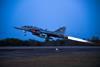
Royal Thai Air Force Gripen D

Source: Royal Thai Air Force

The Gripen has made its combat debut against Cambodia

The ban is effective immediately and threatens fines and possible imprisonment for those “flying or launching unmanned aircraft,” says the Civil Aviation Authority of Thailand.

In addition, drone flights have been banned within a 5nm (9km) radius of any Thai airport.

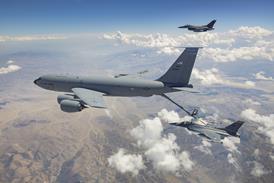
The ban comes one day after the Royal Thai Air Force (RTAF) announced that its Lockheed Martin F-16s and Saab Gripens have been in action during the conflict.

“Under the joint operational plan, the Royal Thai Air Force has deployed air power from F-16 and Gripen squadrons to support ground missions in the form of precise strikes against military targets that pose a threat to Thailand’s security, particularly the destruction of opposing weapons depots and combat control centres, with day and night operations assessed using modern intelligence and technology,” says the RTAF.

This is thought to be the Gripen’s first combat use. 

Thus far, combat operations are understood to have been restricted to the border region between the two countries.

Cirium, an aviation analytics company, indicates that the combat capability of Thailand’s air force is vastly superior to that of Cambodia’s, which has no fixed-wing strike assets.

It lists the RTAF as having 109 fixed-wing combat jets and training variants, comprising 47 F-16A/Bs, 33 Northrop F-5Es, 11 Gripen C/Ds, and 18 Dassault/Dornier Alpha Jets.

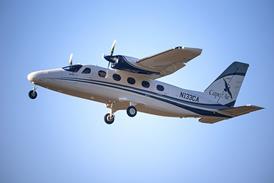
In addition, it has eight brand new Textron Aviation AT-6 Wolverine light-attack aircraft, as well as 12 Pilatus PC-6s that are listed as having a close air support mission.

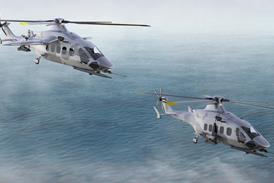
Thailand’s army operates seven Bell AH-1s with an average age of 43.6 years, with orders for eight Boeing AH-6 Little Birds.

The Royal Cambodian Air Force’s combat capability is restricted to a trio of Harbin Z-9 helicopters that have a light attack capability.