













US investigators state that a Southwest Airlines Boeing 737-800 captain did not adhere to runway-verification procedures before the jet commenced its take-off roll from a parallel taxiway at Orlando earlier this year.
The aircraft, bound for Albany on 20 March, had been cleared to taxi from its Airside 2 apron stand to runway 17R via the H2 link – one of two links, H1 and H2, connecting the apron to the northern end of the runway.
Visibility was good at the time of the morning daylight departure.
According to the US National Transportation Safety Board the aircraft stopped abeam the entrance to H1, waiting for another Southwest aircraft to move out of the way.
While the crew waited, they completed the ‘before take-off’ checklist. Once the aircraft was able to proceed, still short of H2, the crew was granted take-off clearance for 17R.
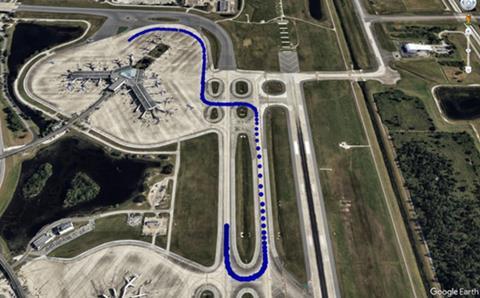
To reach the runway the aircraft had to taxi along H2, crossing taxiways G and H which ran parallel to 17R.
Flight-recorder data shows that, as the aircraft moved onto H2, thrust on both engines increased to at least 40% of N1 and remained at this level.
The aircraft crossed taxiway G and the captain – having seen the red 17R runway sign – stated that runway 17R was verified, and the final approach clear, although the aircraft had not actually reached the runway.
According to crew testimony, the captain asked the first officer to confirm they had run the ‘before take-off’ checklist, and the first officer confirmed this by briefly scanning the overhead panel.
As the first officer finished the scan, he felt the aircraft turn to the right, while the captain declared he was setting take-off power and advancing the thrust levers.
But the aircraft, travelling at 14kt, had turned onto taxiway H. The captain told the inquiry that the jet wasn’t centred and, as he applied corrective rudder, he “didn’t notice” the aircraft was on a taxiway.
The first officer told investigators that he “momentarily looked down” at the thrust levers, but then realised that the jet was on the taxiway.
“I was startled when I saw this and it took a few seconds for me to vocalise, “We are on the taxiway – reject,” he said.
Tower controllers also contacted the crew, ordering the aircraft to stop and cancelling its take-off clearance.
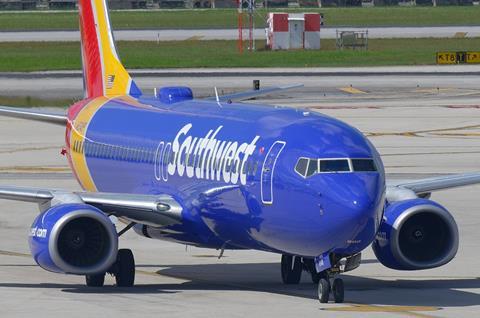
Analysis indicates the 737 reached a groundspeed of 66kt and computed airspeed of 71kt. The jet travelled about 800ft along taxiway H before it started rapidly decelerating. It then vacated the runway.
The inquiry says the captain did not follow standard Southwest Airlines operating procedures, initiating the take-off without verbally verifying the aircraft was on the correct runway.
He also “missed several cues” that would have informed him of the error, it adds, including the yellow taxi centreline, narrower surface, inconsistent signage, and the absence of a hold-short line.
Southwest Airlines procedures emphasise the importance of maintaining an outside visual scan during taxiing. The inquiry points out that the first officer was “distracted” as he verified checklist items as the jet erroneously turned on the taxiway.