














The US Department of Transportation’s top inspector has launched an investigation into the Federal Aviation Administration’s management of airspace near Washington, DC.

The investigation will focus on the agency’s design of the airspace and its process of granting military exemptions to a requirement that aircraft use Automatic Dependent Surveillance-Broadcast (ADS-B) systems.

The review, disclosed by the DOT’s Office of Inspector General on 8 August, comes amid scrutiny over the FAA’s operations – a response to the 29 January midair collision involving a US Army Sikorsky UH-60L Black Hawk helicopter and a PSA Airlines MHIRJ CRJ700 regional jet.

NTSB PSA crash3

Source: National Transportation Safety Board

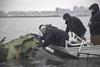
Crews retrieve portions of the US Army Black Hawk that collided with a PSA Airlines regional jet near Washington, DC on 29 January

The helicopter had not been transmitting ASB-B “Out” information when, flying higher than permitted, it collided with the CRJ700, which was moments from landing at Ronald Reagan Washington National airport, the National Transportation Safety Board has said.

Both aircraft plummeted into the Potomac River, killing all 65 people on the regional jet and all three on the Black Hawk. The Black Hawk had been operating a pilot training flight.

“We are initiating this audit to review FAA’s oversight of existing safety gaps in the management of DCA’s airspace, including the exemption process for ADS-B Out,” says the DOT inspector’s office. “Our audit objectives are to assess FAA’s oversight and management of the airspace surrounding DCA, and policies and procedures to oversee ADS-B Out exemptions.”

The office intends to begin the audit this month.

The investigation comes at the request of two senators who asked the inspector general “to review a wide-ranging set of safety issues surrounding the accident”, the DOT office adds.

The FAA has since 2020 required aircraft have and use ADS-B Out, a system that transmits an aircraft’s position and other information about is flight to air traffic controllers. Aircraft equipped with ADS-B “In” – which the FAA does not mandate – also receive the position reports. The ADS-B system is intended to give controllers and pilots more information about air traffic, helping prevent collisions.

Under a compromise with military and government aircraft operators, the FAA permits government aircraft operating “sensitive” missions to be exempt from the ADS-B Out requirement. It has allowed those operators to define which missions are sensitive.

The US Army has used that exemption extensively when flying helicopters in the Washington, DC region.

On 29 July, senator Ted Cruz introduced a bill that if passed would prohibit government training flights from qualifying for the exemption. It would also require that all aircraft, within five years, have and use ADS-B In.