













New Zealand investigators probing an in-flight engine shutdown involving an Airbus A320neo believe the event is linked to overhead fire-control panel damage which could result in uncommanded activation of an engine-fire switch.
The inquiry into the Air New Zealand incident, on 1 December last year, has highlighted five other similar occurrences over the course of 2016 to 2024.
These involved A320- and A320neo-family aircraft operated by Royal Jordanian, JetBlue Airways, Air France, TAP Portugal and Flynas.
Portuguese investigation authority GPIAAF had previously determined – during a probe into the TAP A321neo occurrence in October 2023 – that slight deformation of a retaining pin within the fire-control panel could cause the fire button to release.
GPIAAF concluded that the panel had been dropped at some point, and the pin deformation was undetected during repair.
The fire-control panel’s manufacturer, Safran Electronics & Defense, had issued two service bulletins in September and October 2024 identifying 108 panels which it recommended should be removed from aircraft and sent for inspection.
“While the documents were accessible on [Safran’s] portal, individual operators were not aware of the availability of these documents,” says New Zealand’s Transport Accident Investigation Commission in interim findings.

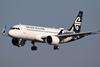
The service bulletin list included the panel fitted to the Air New Zealand A320neo (ZK-NHA).
According to the commission the panel was manufactured in 2015, and initially installed on another Air New Zealand A320 (ZK-OXK) before being removed in 2018 for unrelated repairs in France.
When it was returned to Air New Zealand it was installed on the A320neo and functioned without problems until the incident.
The commission says the aircraft – operating from Wellington to Sydney – had been established in cruise at 36,000ft for about 15min when the cockpit instruments showed the right-hand Pratt & Whitney PW1100G engine was rolling back.
Its crew carried out the shutdown checklist and initiated a driftdown procedure before diverting to Auckland, where the aircraft landed without further incident. None of the 148 occupants was injured.

Upon arrival, personnel in the cockpit noticed the fire button for the right-hand engine had been released. “Neither pilot recalled activating the fire switch and none of the checklists used by the crew required activation of this fire switch,” the commission states.
Air New Zealand subsequently identified two other panels from the Safran list that were installed in its aircraft. These were both removed within three weeks of the incident.
Within the same timeframe Airbus issued an information transmission to operators referring to the lists, encouraging carriers and maintenance organisations to retrieve and return the identified panels to Safran for examination.
The European Union Aviation Safety Agency has newly published an airworthiness directive, effective 21 November, which refers to “occurrences” of one engine fire button “self-releasing” and inducing an uncommanded in-flight shutdown.
EASA has ordered inspections of specific fire-control panels and told operators to follow instructions for replacement or repair if required.