










Brazilian investigators have cited poor communications and slipshod practices after a Boeing 727-200 narrowly missed a vehicle towing a lighting tower while rotating for take-off at Curitiba airport.
The right wing of the Total Linhas Aereas freighter – departing runway 15 for Sao Paulo on 24 July last year – passed just 6m (20ft) above the lighting mast during the night-time departure.
While clearing the aircraft for take-off, says Brazilian investigation authority CENIPA, the tower controller scanned the runway but “did not notice” the vehicle approaching from the opposite end, near the runway 33 threshold.
The vehicle was towing a lighting array and was scheduled to lead a convoy of seven vehicles which intended to enter the runway for overnight construction work.
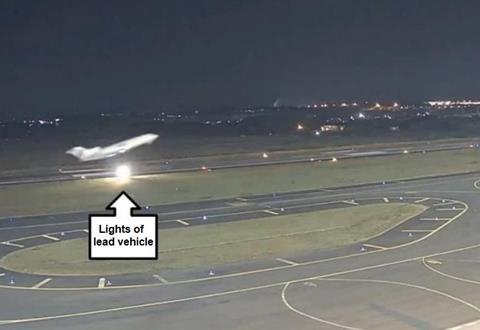
Vehicles with no radio communications equipment on board were supposed to be escorted by one which did. But CENIPA found that, despite being assigned to this escort role, the lead vehicle also had no radio equipment – in breach of regulations.
The inquiry also determined that the driver of the lead vehicle, contrary to provisions, had been authorised to access the aircraft manoeuvring area despite carrying only temporary credentials.
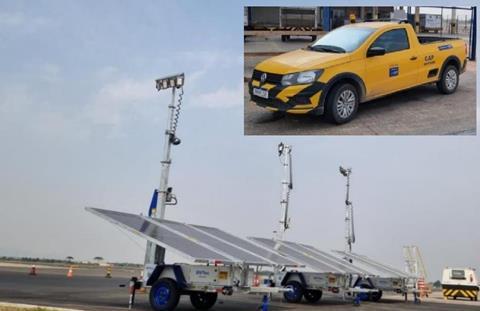
CENIPA found that access to the runway for construction vehicles had originally been co-ordinated via radio by an employee of the contractor, who carried out nightly safety briefings.
But after a break in the construction period this employee was moved to a day shift, and the briefings and radio co-ordination were no longer carried out. A less-rigorous arrangement emerged, with phone messages replacing radio communication.
On the night of the incident the entry of the lead vehicle was co-ordinated via text message from the apron inspector to the construction supervisor, and referred to the departure of the Total 727, the last flight of the evening.
But the message, intended to inform that the runway would be clear after the 727 departed, was incorrectly interpreted to mean the aircraft had already taken off. As a result, the lead vehicle was cleared to enter the runway.
CENIPA says workers had adopted “informal practices” – including using the take-off of the Total aircraft as a reference for starting work – to the “detriment” of defences established through regulatory procedures.
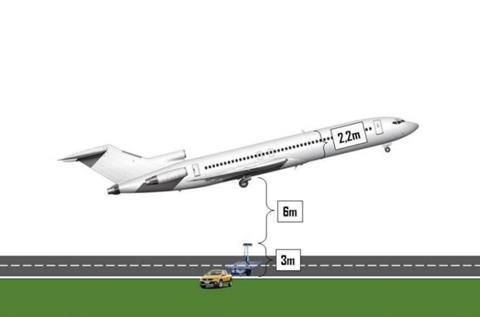
The tower controller “failed to monitor” the operation, says the inquiry, and noticed neither the vehicle’s entry nor its presence during the 65s it spent on the 45m-wide runway.
CENIPA says the driver, who had no relevant training, thought the lights of the approaching 727 were those of another construction team on the runway. The aircraft’s crew did not notice the vehicle at any point during the take-off.
While the second vehicle in the convoy realised the 727 was approaching, the absence of radio equipment meant its crew could not warn the lead vehicle, which travelled 285m along the left side of runway 15 before its occupants belatedly took evasive action by steering onto grass.
None of the personnel involved – the four crew members of the 727 (PR-TTO) and the two people in the vehicle – was injured.