













The aerospace units of major Japanese industrial groups Mitsubishi Heavy Industries (MHI), IHI, and Kawasaki Heavy Industries enjoyed revenue and operating profit growth for the 2024 financial year ended 31 March.

The Aircraft, Defense & Space unit of Mitsubishi Heavy Industries saw revenues jump 36.4% to Y828 billion ($5.6 billion) owing to improved project execution. Operating profit for the unit rose 37.5% to Y100 billion.

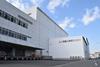
MHIAEL MHI Komak

Source: Mitsubishi Heavy Industries

MHIAEL’s Komaki City facility

In addition to a final assembly and check-out facility for the Lockheed Martin F-35A programme, the unit is involved with other aircraft and helicopter programmes, as well as naval and land programmes.

MHI’s commercial aviation business – which is heavily involved in aerostructures – also saw growth, with revenues rising 9.7% to Y185 billion.

Despite fewer deliveries related to the Boeing 777 programme, commercial aviation benefited from the depreciation of the Japanese Yen and good performance in the after-sales service business.

MHI’s aero engines business – which falls under the company’s Energy Systems division – saw revenues rise 38% to Y238 billion.

The aero engines business, known as MHIAEL, benefited from revenue growth and the absence of charges in the previous financial year. The unit is a major player in the supply chain of key international engine programmes, and also engine maintenance repair and overhaul work.

The Aero Engine, Space and Defense unit of IHI also had a good 2024 financial year, with revenues jumping 30% to Y556 billion. Operating profits at the unit doubled to Y123 billion.

IHI gained from higher sales of spare parts for commercial engines, as well as improving profitability with the Pratt & Whitney PW1100G, on which the company is a major contributor.

Looking forward, IHI is confident that demand for commercial aircraft will continue to grow. In addition to benefiting from fleet growth, IHI hopes to capitalise on the aftermarket for revenue growth, specifically the technology to competitively repair parts.

As for its defence business, IHI sees continued opportunities in the maintenance programme for the P&W F135 engine that powers the F-35, as well as in production and support for the Global Combat Air Programme, in which Japan is partnered with Italy and the UK.

At Kawasaki, the Aerospace Systems unit saw revenues grow 43.3% to Y568 billion, as it swung to an operating profit of Y70.8 billion compared with a Y15 billion loss in 2023 financial year.

The profitability stemmed from the absence of one-off charges related to Kawasaki’s contribution to the PW1100G-JM engine, as well as growing commercial and defence orders.

The company also revealed that it completed a contract to produce a standoff electronic warfare (EW) variant of the C-2 tactical transport aircraft.

Development of the EW-roled C-2 started in 2020, with a technological and operational test due in 2026, and the completion of development in 2027.