













Leonardo maintains it is on track to sign an agreement by year-end with an undisclosed partner that will create a new aerostructures joint venture, a move that it hopes will finally put its underperforming unit on the road to recovery.
Roberto Cingolani, Leonardo chief executive, says the company is having regular meetings with its prospective partner following a July go/no go decision, as it attempts to thrash out a structure and “detailed implementation roadmap” for the joint-venture operation.

“We maintain our target to sign the partnership agreement by the end of the year,” he said, presenting the Italian group’s nine-month results on 6 November.
“Of course, we are working very, very hard to close this very complex negotiation. We believe we can keep the end of the year as a target.
“Clearly after almost one year of work there is very strong motivation.”
He says there is “strong interest” in the tie-up from the governments of both partner companies “which is an extra guarantee that we are on the right track”.
In the interim, Leonardo has been informing its key aerostructures customers – notably Airbus and Boeing – about its intentions. “The reaction seems to be interested,” he says.
While the aerostructures business turned in another EBITA loss of €135 million ($155 million) during the first nine-months of the year, Cingolani says he is “satisfied” with its overall performance, notably due to the rate increases confirmed by Boeing on the 787 programme.
This saw output rise from five per month in the second quarter to seven per month in the third “and it is now moving towards eight”, he adds.
As a result, Leonardo shipped 51 centre fuselage sections and 39 horizontal stabilisers in the first nine months of the year, up on the respective figures of 37 and 25 in the same period of 2024. Revenue stood at €510 million versus €508 million a year earlier.
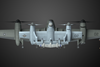
Leonardo builds composite fuselage barrels and stabilisers for the Dreamliner at factories in southern Italy.
It also secured a contract from Airbus in the period to act as a second supplier for rear fuselage structures on the A220.
The aerostructures unit now sits within the new aeronautics division alongside the firm’s military aircraft business.
This brought in €4.3 billion of new orders in the period, including a substantial support contract for Kuwait’s Eurofighter combat aircraft fleet and a new export deal for the C-27J tactical transport worth “in the region of €100 million”. Divsional EDITA was €96 million on revenue of €2.8 billion.
For the first time, the aeronautics division’s results include orders from the Global Combat Air Programme (GCAP), a trinational effort involving Italy, Japan and the UK to develop a sixth-generation fighter.
That effort is being run by a separate company, Edgewing, a joint venture between BAE Systems, Leonardo, and Japan Aircraft Industrial Enhancement.
Since its inception in June this year, it has grown to around 180 employees and the “ramp-up is proceeding on track”, he says.
The three nations, through their GCAP International Government Organisation, are “now discussing the first international contract [for] Edgewing”, he says.
“Apparently the GCAP machine is moving, the company is up and running, and if we work seriously and are all committed to getting the results on time, I think our GCAP roadmap will grow properly and that’s important because apparently our competitors are slowing down for different reasons.”