
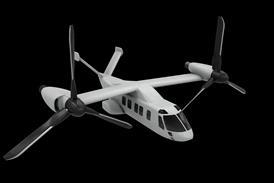












Aciturri Aerostructures will build the airframe for Vertical Aerospace’s VX4 electric vertical take-off and landing (eVTOL) aircraft, the companies have announced.
“Under the partnership agreement, Aciturri will supply the entire airframe, including the wing, empennage, pylons and fuselage,” they said on 4 August.
In addition, the aerostructures supplier “will also have engineering responsibility for several structural components and will provide concurrent manufacturing engineering for the airframe programme, providing the conditions for the VX4 to be built efficiently, reliably, and at scale”, they add.
The arrangement applies to future pre-production examples of the eVTOL type, “and, subject to certification, [the] certified VX4 that will enter into service”. Vertical hopes to secure certification for its design during 2028.
“By combining the expertise of Vertical’s engineering team with Aciturri’s proven track record in high-quality aerospace manufacturing, this partnership continues Vertical’s progress towards certification and scalable production of the VX4,” the UK developer says.
“As we accelerate toward commercialisation, the VX4 demands an airframe built specifically for the unique challenges of eVTOL [flight] and the highest levels of safety certification,” says Vertical chief executive Stuart Simpson. “Aciturri brings the world-class capability, agility, and technical excellence we need to turn great designs into great aircraft,” he adds.
“We look forward to partnering together through development, certification, and production to deliver a globally exportable and commercially viable eVTOL aircraft.” says Aciturri Aerostructures chief executive Manuel Gonzalez Relano.
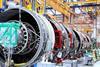
The company points to its long manufacturing experience on programmes including the commercial Airbus A320 and Boeing 737, plus Embraer’s C/KC-390 military airlifter, along with work on eVTOL programmes for Eve Air Mobility and former developer Lilium.
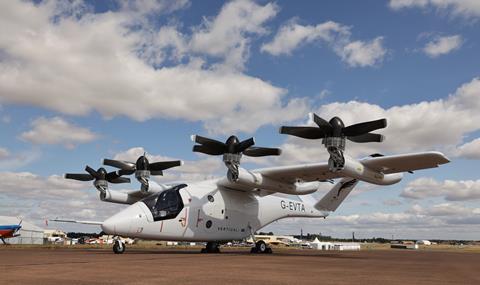
Vertical in mid-July flew a prototype VX4 from its Kemble airfield site in Gloucestershire to appear in the static display at the Royal International Air Tattoo at nearby RAF Fairford. Marking the platform’s public debut, the sortie covered 15nm (28km), at a maximum altitude of 1,800ft.