







Meteorological agencies in France and the UK are spearheading the launch of a new and more detailed volcanic ash forecasting service they believe could significantly reduce disruption to airlines in the event of a large-scale volcanic eruption.

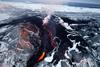
When the Eyjafjallajokull volcano in Iceland erupted in 2010, a vast swathe of European airspace was closed due to the safety risks posed by the ash cloud, causing widespread flight cancellations and delays.

eyjafjallajokull volcano

Source: FlightGlobal

Eyjafjallajokull eruption in 2010 caused significant disruption to flights

But the new service, which will from 27 November supply Quantitative Volcanic Ash (QVA) forecasts, could dramatically reduce the amount of disruption if a similar eruption was to occur, says the UK’s Met Office, which acts as the London Volcanic Ash Advisory Centre (VAAC).

QVA forecasts use a gridded system which provides the expected ash concentration for 12 horizontal slices of the atmosphere - from the ground up to around 60,000ft - as well as probability forecasts which indicate the likelihood that certain ash concentrations will be exceeded.

The new forecasts are intended to support a shift away from traditional discernible/visible ash criteria and instead take advantage of engine and airframe volcanic ash certification specifications, the Met Office says.

“QVA data will help airlines make more informed decisions to avoid higher concentrations of ash and will minimise the airspace that needs to be closed in the event of a future eruption,” says Karen Shorey, a Met Office aviation specialist.

QVA forecast

Source: Met Office/Crown Copyright

Updated forecasting method promises more detailed predictions of ash concentrations

VAAC London is responsible for issuing forecasts for volcanic eruptions originating in Iceland and the northeastern corner of the North Atlantic.

A total of nine VAACs will provide the new service, with the Met Office and its French counterpart Meteo France (VAAC Toulouse) producing the new higher-resolution QVA forecasts required under International Civil Aviation Organization regulations from 27 November 2025. The seven other VAACs will follow one year later.

The Met Office’s new QVA service will be available free to all airlines and the aviation industry worldwide.

“With our new service we estimate that the disruption today from an eruption of Eyjafjallajokull would be half of that experienced in April 2010,” says Mark Seltzer, expert operational lead for VAAC London.