













Judge Reed O’Connor to consider DOJ’s request to drop prosecution in favour of non-prosecution agreement, while victims’ families seek appointment of special prosecutor to continue the case

A court hearing scheduled for 28 August could determine whether the US Department of Justice (DOJ) succeeds in having its criminal fraud case against Boeing dismissed.

Federal judge Reed O’Connor with US District Court for the Northern District of Texas has set that date to consider the DOJ’s request to dismiss the matter, according to a 18 July order.

The government filed that request in May after reaching a non-prosecution deal with Boeing.

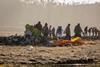
ethiopian crash debris c Mulugeta Ayene_AP_Shutter

Source: Mulugeta Ayene, AP, Shutterstock

Wreckage from the crash of Ethiopian Airlines flight 302, a Boeing 737 Max 8 that slammed into the ground after take-off from Addis Ababa on 10 March 2019, killing all 157 people aboard.

But the requested dismissal faces pushback from lawyers representing relatives of victims killed when two 737 Max jets crashed, in 2018 and 2019. Those attorneys have asked the judge to keep the case active and to order that a special prosecutor take over.

Among questions before the judge is whether the court should, or has legal authority to, compel the DOJ to proceed with a case that it no longer wishes to prosecute.

The US government filed criminal charges against Boeing in January 2021, alleging it defrauded the Federal Aviation Administration during certification of the 737 Max by not informing the agency fully about the type’s Maneuvering Characteristics Augmentation System. Malfunctions of that system contributed to both 737 Max crashes, killing all 346 people on the jets.

Boeing was initially set to sidestep prosecution under a deferred prosecution deal, but the DOJ tore that arrangement up in response to the January 2024 in-flight failure of a 737 Max 9’s door plug. Investigators attributed that event to Boeing manufacturing errors.

Then, in July 2024, Boeing agreed to plead guilty to the fraud charges under a different deal with the DOJ. But O’Connor scrapped that plan due to concerns about a compliance-monitoring requirement.

The case had been headed to trial.

In May, the DOJ, by then under the administration of President Donald Trump and his attorney general Pam Bondi, asked the judge to dismiss the case. Instead, the DOJ said it had reached a non-prosecution deal with Boeing that requires the company pay $1.1 billion, including a $243.6 million criminal fine, $444.5 million in compensation to crash-victims’ beneficiaries and $455 million in efforts “to strengthen the company’s compliance, safety and quality problems”.

DOJ lawyers say the deal “secures meaningful accountability, delivers substantial and immediate public benefits and brings finality to a difficult and complex case whose outcome would otherwise be uncertain”.

But victims’ attorneys are urging O’Connor to deny the DOJ’s motion to dismiss. They note that Boeing already, as part of its 2024 guilty plea, admitted to defrauding the FAA, and they criticise the DOJ for agreeing to the non-prosecution deal before O’Connor agreed to dismiss the case.

“This is the first case in modern American history where the parties have agreed that the prosecution of an already-filed criminal charge will stop, even before the court has ruled on the dismissal motion,” families’ lawyers say.

They have asked O’Connor to rule the non-prosecution agreement void and to appoint a “limited-purpose special prosecutor to” pursue the case through to trial. Special prosecutors are typically appointed to handle cases where the DOJ has a conflict of interest.

The DOJ insists that prosecution rules leave the court unable to “compel the government to prosecute”, adding that the court is “constitutionally powerless” to do so, according to court filings.