















The number of 777X in Boeing’s backlog slipped by 33 jets in recent months after the company shifted those orders into an accounting bucket reserved for deals it suspects will not result in actual sales.
Boeing confirms the change to FlightGlobal after having disclosed revised backlog figures in its third-quarter financial report. The company made the shift in October but applied the change to its September figures.
Removing those 33 orders left 473 777X in Boeing’s backlog at end-September – a figure unchanged through end-October.
The adjustment came amid lengthy and ongoing delays to certification of the first 777X variant, the 777-9. Boeing on 29 October revealed another delay, saying it intends to deliver the first of the type in 2027, not 2026 as previously expected, due to the Federal Aviation Administration’s slow pace in approving certification flight testing.
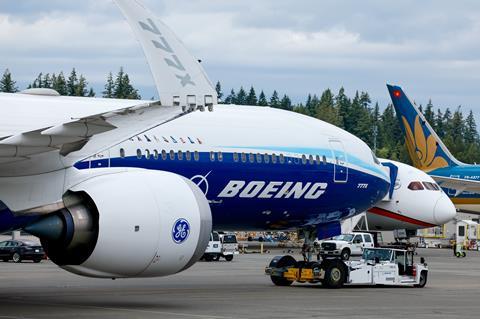
Boeing has had moderate success selling the delayed 777X, but cancellations and accounting adjustments had winnowed the backlog in recent years.
This year, however, sales have been brisk, with Boeing landing 84 777X orders in 2025 through October, its data shows. Several of those deals came together with support from US President Donald Trump amid trade negotiations. Boeing aims to sell more of the widebodies next week at the Dubai air show, where it has a 777-9 on display.
Boeing on 11 November released its order and delivery figures through October, saying it ended the month with 5,911 jets in its backlog, down from 5,954 one month earlier. The backlog includes 4,312 737s, 85 767s, 521 777s and 993 787s.
Boeing landed new orders in October for 15 jets – a low figure by its recent standards – including eight 737 Max (six from Tui Travel and two from unidentified buyers) and seven 787s (all buyers unidentified).
Last month customers also cancelled orders for seven 737 Max, and Boeing moved orders for two of the narrowbodies into its special accounting bucket, leaving it with net new orders in October for 10 aircraft.
But Boeing managed a swift delivery pace last month, handing over 53 jets, including 40 737s, four 767s, two 777 Freighters and seven 787s.
The accounting bucket – called “ASC-606” – is reserved for orders Boeing deems unlikely to close due to any number of actors, such as a buyer’s financial position and geopolitical roadblocks.
The company still holds contracts to sell jets in the ASC bucket but does not count them as part of its backlog.
Boeing also regularly reverses the designation, shifting orders from ASC back into its backlog in response to changing circumstances that make it confident the sales will close.