













Boeing’s earlier plan for redesigning the 737 Max’s engine anti-ice system ended up not working out.
That is why company engineers missed Boeing’s initial goal of having the design changes finalised in January of this year. It is also why Boeing on 29 July pushed to 2026 its expectation for when the 737 Max 7 and Max 10 will achieve certification.
FlightGlobal reported on 25 July that Boeing had not yet finalised a 737 Max engine anti-ice system redesign intended to prevent an overheating problem, citing an internal Boeing newsletter.
The newsletter provided scant details.
On 29 July, Boeing chief executive Kelly Ortberg expounded just a bit, saying the company ditched an earlier redesign plan.
“We found some issues with the design implementation we had, so we’re going to have to back up and make some additional design changes to get through that… deicing requirement,” Ortberg said, speaking during Boeing’s second-quarter earnings call. “Basically, the engineering designs have not yielded in the timeframe we were anticipating… We just haven’t closed the design.”
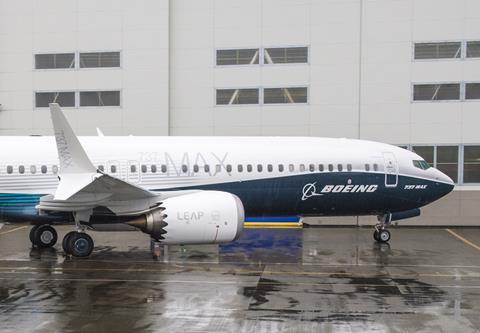
Boeing in 2023 revealed the problem: when used in certain conditions, the 737 Max’s engine anti-ice system can cause engine inlet inner barrels to overheat and possibly fail, Boeing has said.
As a result, the company must redesign the system prior to achieving the 737 Max 7’s and Max 10’s certification.
In January 2024, Boeing said the redesign would take one year. One-and-a-half years later, the project remains incomplete.
During the 29 July earnings call, Ortberg provided few details but described the redesign as complicated because tweaking the engine anti-ice system can affect other design aspects, such as the performance of the 737 Max’s CFM International Leap-1B turbofans.
“This is very delicate area that we are dealing with around the inlet of the engines,” Ortberg says, noting engineers must understand how changing the engine anti-ice system might “cause any perturbation to the airflow into the engines”.
“We’ve got several different design paths that we have been going down for solutions,” Ortberg adds.
In-service 737 Max 8s and 9s have the same troubled engine anti-ice system but were certificated before the issue became known and can therefore continue flying.
The Federal Aviation Administration addressed the risk in those types by ordering airlines to instruct pilots not to use the system unless they are in icing or expect to be.
Boeing expects eventually to equip Max 8s and Max 9s with its engine anti-ice system redesign.