













Air New Zealand expects engine-related aircraft groundings to ease slightly in the first half of 2026, as it warns of the “significant impact” the issue has on its financial performance.
The Star Alliance carrier expects between nine and 10 jets to be grounded in the first half of 2026, compared to current estimates of up to 11 aircraft for the rest of the year.
Air New Zealand has been hit by a double-whammy of engine issues, on its Pratt & Whitney PW1100G-powered Airbus narrowbodies, as well as on its Boeing 787s, which are powered by Rolls-Royce Trent 1000s.
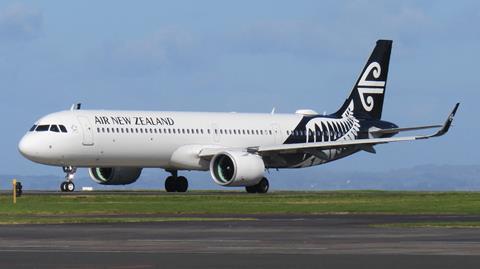
The groundings make up a third of its affected fleet: Air New Zealand’s latest fleet data shows it operates 14 787-9s, and 15 A320neo-family aircraft.
The airline in April warned of a “substantial” earnings hit from the engine issues, noting that maintenance timeframes were “unpredictable”.
In its latest update, which came alongside its full-year financial results, Air New Zealand discloses it has received NZ$129 million ($75.6 million) in compensation for the engine issues, and is working closely with both engine manufacturers for further “further compensation arrangements” and to “secure a more reliable picture” of maintenance timelines.
The airline also notes that the financial impact of the engine issues were “significant” despite the compensation.
The groundings were costing between NZ$280 and NZ$320 million for the year ended 30 June, according to the carrier, which contends that its full-year profit would have been around NZ$165 million higher “had the fleet operated as intended”.
To this end, the airline has also secured additional leases on P&W engines, and taken two A321neos on lease to mitigate capacity shortfall.
“We are confident in the medium-term recovery path but note the next year will likely be every bit as constrained as the last. Unfortunately, there are no quick fixes, and navigating the next two years will require the same focus and discipline we’ve shown to date,” says Foran.
Air New Zealand’s pre-tax profit for the year was down 15% to NZ$189 million, as revenue saw very little growth on the back of a reduction in capacity and traffic.
Full-year revenue stood at NZ$6.8 billion – around the same as the previous year – with passenger revenues down 2%.