
















Australia’s Qantas Group has largely kept its capacity guidance for the second-half of its 2026 fiscal year, with passenger demand continuing to hold up.
However, the airline group, which comprises mainline operator Qantas and low-cost brand Jetstar, has warned that geopolitical uncertainty has led to “volatility” in fuel prices – a potential challenge it is closely monitoring.
“Geopolitical events continue to create fuel price volatility with jet refining margins remaining elevated,” states Qantas.
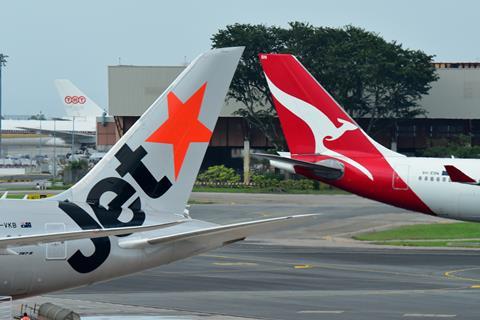
In a market update issued 7 November, Qantas says group domestic revenue is expected to be up 3% year on year, which it notes is “at the lower end” of an earlier earnings guidance in August.
While domestic leisure and the resource market travel demand “remain strong”, Qantas flagged corporate travel demand to be growing “at a slower rate than previously forecast”. Low-cost carrier Jetstar continues to see strong domestic travel demand.
On the international network, Qantas Group has maintained its previous revenue growth forecast – at around 2-3% – with demand likely to remain stable.
The group adds that it is “monitoring the ongoing US government shutdown and working closely with partners to support customers with no material impact seen on demand to date”.
However, group international capacity has been revised down for the six months ending 31 December, with fleet deployment cited as a key reason. Qantas’ international capacity growth for the half-year is forecast at around 6%, down from earlier estimates of 7%.