














Brewing tension between Future Combat Air System (FCAS) partners Dassault Aviation and Airbus Defence & Space looks ready to boil over amid a growing row about the lack of a clear leader on the project.
Although stopping short of delivering an ultimatum, outspoken Dassault chief executive Eric Trappier warns the consortium cannot continue in its current form.
“It is not a question of [Dassault] leaving or not leaving, it is whether or not the project will continue,” he said, presenting the French airframer’s half-year results on 22 July.
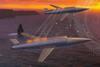
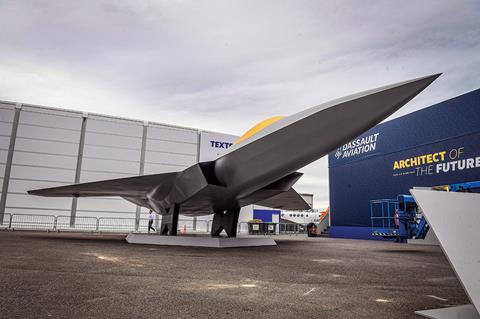
In theory, Dassault is leading the development of the manned New Generation Fighter (NGF) element of the tri-national FCAS programme.
Currently progressing the design and definition work of a demonstrator aircraft through Phase 1B of the project, development of the NGF has been repeatedly hampered by the clear tension between Dassault, representing France, and Airbus Defence & Space, working for Germany and Spain.
Although relations between the two appeared to have stabilised through Phase 1B, as negotiations for Phase 2 commenced, fresh difficulties have appeared.
These came to a head at June’s Paris air show, culminating in the widely reported claim that Dassault was prepared to withdraw from FCAS unless it secured significantly more workshare on the NGF.
But Trappier plays down that suggestion: “We are not seeking 80% of the work,” he says, ”that is not at all what Dassault wants.”
However, in a broadside at Airbus, he lambasts his partner’s project management, describing an approach where “all decisions should be made democratically with a vote before every decision”.
“I disagree with that. Give me an example of any ambitious industrial project anywhere in the world that doesn’t have a clear leader,” Trappier says.
He insists the project needs a confirmed “architect” able to make critical decisions on its own, including which subcontractors it uses, or the programme will fail.
“I want to be able to select the subcontractors that I want to work with and if they don’t get the job done well then I want to be free to switch,” he says.
“They need to clarify everyone’s roles and obligations, and we need clear leadership.”
Part of the problem, he suggests, is the relative scale of the two companies: “Dassault cannot exactly have a leadership position if they are dealing with people that are two or three times their size,” he says.
Dealing with political pressure from multiple nations is also problematic, he says, adding: “We don’t believe in the [management structure] used for Eurofighter – we believe in the method for Rafale, we believe in going it alone.”
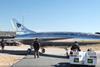
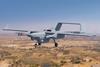
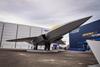
However, Trappier also highlights the successful development of the Neuron unmanned combat air vehicle demonstrator last decade. While Dassault was in overall charge of the project, the workshare was split between six different companies.
“When it came to Neuron, we didn’t do 80% of the work, we just did our share; we were happy to outsource.”
Under current timelines, the NGF demonstrator is due to fly in 2028, with an operational system to enter service around 2040. It is designed to be part of a broader system of systems that includes remote carrier vehicles, new weapons and an advanced combat cloud.
Trappier has also offered a sideswipe at Belgium, which earlier this week said in addition to buying another batch of Lockheed Martin F-35s, it was seeking full membership of FCAS.
“If it gives up the F-35s then it will be welcome, otherwise it is really making a monkey out of us,” he says.