













Pratt & Whitney Canada (P&WC) is still working on a new turboprop engine called the PT9A-11 and is also continuing to seek certification of a new helicopter turboshaft powerplant called the PW220A.
That is according to recently filed regulatory documents in which the company, a division of RTX, asks the Federal Aviation Administration (FAA) for regulatory exemptions required for certification.
P&WC had in June 2024 initially asked the FAA for an exemption for the PT9A-11 – thought to be a possible successor to its popular PT6A turboprop. It later withdrew the exemption request.
P&WC has now refiled a nearly identical request with the FAA, seeking to exempt the PT9A-11 from overspeed-related rules specific to engine shafts.
The new document, dated 29 November but published on 9 December to the US government’s regulatory database, describes the powerplant as “a new centreline turbo-propeller engine”.
“The PT9A-11 engine model further extends one of the best-selling single-engine turbo-propeller… model’s long history by remaining a competitive engine in the marketplace, thus maintaining sales of the product, mainly in foreign countries,” says the document. “The lower fuel consumption and reduced part [replacements] would directly lead to a reduction of the aircraft operational costs for operators.”
P&WC declines to comment.
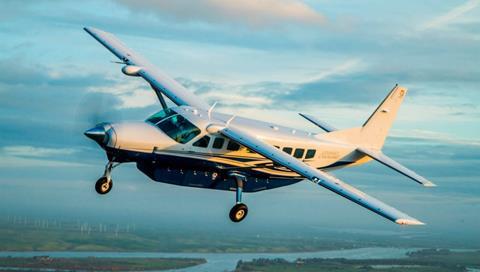
The company introduced the PT6, a 500-1,900shp (373-1,417kW)-class turboprop, in 1963 and has produced more than 64,000 of the engines, which power a range of aircraft, like Cessna 208B Caravans and Pilatus PC-12s.
P&WC is seeking a similar regulatory exemption for the PW220A, a “new centreline turboshaft engine”, according to a regulatory request from the company dated 27 November and also just published by the US government.
The manufacturer says the PW220A will be more efficient than other models and “ensure continued sales of one of the best-selling helicopters in its category”. No details of the proposed engine output were disclosed, however.
P&WC now produces its popular 500-700shp PW200 turboshaft, which powers various twin-engined helicopters including Airbus Helicopters H135s, Bell 427s and 429s, Leonardo AW109s and MD Helicopters MD900 Explorers.
The Canadian engine maker in November 2021 applied for the PW220A’s type certificate with the FAA.
The regulatory documents say both the PT9A-11 and PW220A benefit from “best practices and lessons learned in the design and analysis of the high-pressure rotor”.
P&WC also seeks an exemption for the PW220A from the shaft overspeed regulations. Those rules specify conditions under which manufacturers can exclude some shaft sections – but not entire shafts – from consideration when determining the fastest overspeed that might result from loss of load.
P&WC has asked the FAA to exclude “complete” rotor shafts on PW220As and PT9A-11s, its requests say. Both engines’ high-pressure rotors contain only two “torque-transmitting components”: the “integral stub shafts” of the high-pressure compressor and of the high-pressure turbine.
“Both rotors are life limited parts and are removed from service when the life is expired. Calculated lives for the stub-shaft portion of these two components are much greater than their declared service life. Therefore, the stub shafts have a very high reliability,” the exemption requests say.