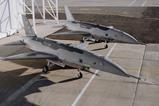














A dozen retired senior officers with the Royal Canadian Air Force (RCAF) are urging the government in Ottawa not to reduce Canada’s planned buy of Lockheed Martin F-35A stealth fighters.
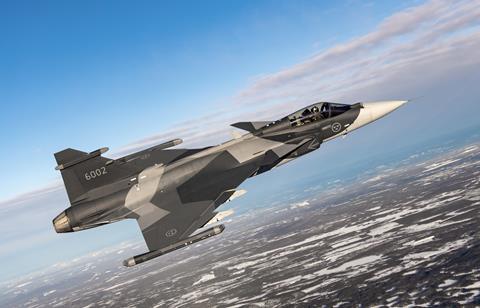
According to reports by Canadian broadcaster Radio-Canada, the former defence officials on 17 November sent a signed letter to key decision makers in Ottawa, including Prime Minister Mark Carney, cautioning against the idea of truncating the country’s future F-35A fleet in favour of buying Gripen E/F fighters from Swedish manufacturer Saab.
The letter has not been made public and neither its contents nor signatories were independently verified by FlightGlobal.
Radio-Canada further reports that former chief of staff of the Canadian armed forces Tom Lawson was among the signers of the letter, though Lawson declines to confirm this.
However, in an interview with the Canadian broadcaster, Lawson does say there is “nothing available in the free world that comes close to the quality of the F-35” in terms of fighter aircraft.
“The F-35 is so far beyond anything that the Gripen can provide that anything you’d be saving in terms of money by going to a second fleet would be lost, because that fleet would be close to useless in a wartime situation,” the former RCAF general adds.
In addition to having been the one-time chief of the Canadian defence staff, Lawson served as commander of the RCAF and deputy commander of the North American Aerospace Defense Command (NORAD) jointly run by Canada and the USA.
Lawson also previously worked as a part-time consultant for Lockheed, but no longer holds a position with the company.
The rhetorical salvo against the Gripen comes the same week of a formal state visit to Canada by top Stockholm officials, including defence minister Pal Jonson, deputy prime minister Ebba Busch and the Swedish monarch King Carl XVI Gustaf.
Canadian defence minister David McGuinty is scheduled to meet with Jonson on 19 November; one day after McGuinty hosted an industry roundtable with venture capital financiers about advancing Canada’s domestic defence capabilities.
Saab chief executive Micael Johansson also travelled to Canada in late October to meet with senior officials in Ottawa. The company is engaged in an aggressive, though publicly subdued effort to win over Canadian decision makers.
Following a blockbuster declaration from the Ukrainian government expressing interest in acquiring up to 100-150 Gripen fighters, Saab floated the possibility of building a new assembly line in Canada to support additional production.
Saab has also offered to locate assembly of its GlobalEye airborne early warning and control aircraft in Canada, should Ottawa commit to a purchase. The GlobalEye platform is based on the Global 6000/6500 business jet, manufactured in Ontario by Canadian airframer Bombardier.
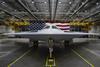
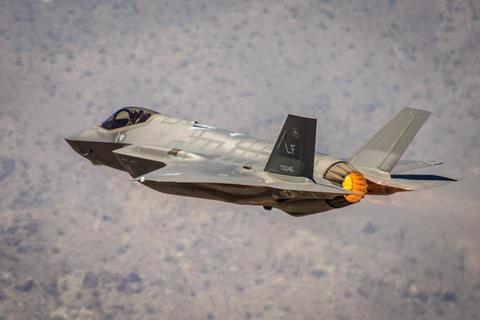
Canada has existing commitments to buy 88 conventional take-off and landing F-35As from Lockheed to replace the RCAF’s aged and obsolete fleet of Boeing F/A-18 Hornet fighters.
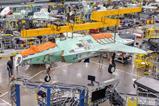
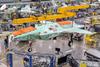
Ottawa has already obligated funds for 16 F-35s, with assembly work on those aircraft already underway in Fort Worth, Texas. The government confirmed in October that it will proceed with the acquisition of that initial tranche.
However, the remainder of the planned fleet of 88 aircraft appears to be up for grabs – driven by a historic deterioration of US-Canadian relations under the administration of President Donald Trump.
Those tensions have pushed Ottawa to reconsider the remainder of its F-35 purchase, driven by a desire to diversify defence procurement away from the USA.
Current prime minister Carney was catapulted into office from relative political obscurity by running a campaign centred on reducing Canada’s economic and military reliance on its southern neighbour.
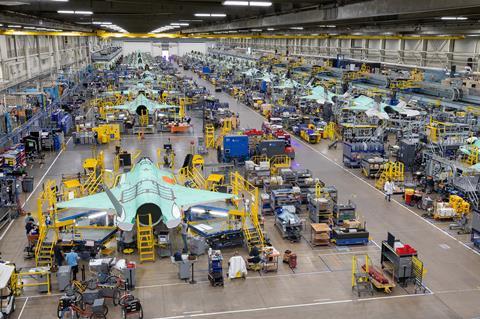
Shortly after taking office earlier this year, Carney ordered a review of the F-35 programme, which was originally promised by the end of the North American summer.
With temperatures now regularly hovering around freezing in Ottawa, that report has still not yet been released – an indicator of the bind in which the Carney government now finds itself.
A number of currently serving senior Canadian defence officials have expressed strong support for the fighter modernisation effort, though stopped short of explicitly endorsing the F-35.
In a July interview with FlightGlobal shortly after assuming her post, current RCAF chief Lieutenant-General Jamie Speiser-Blanchet affirmed her commitment to “building a very modern fifth-generation air force”.
In an October parliamentary hearing, Speiser-Blanchet told lawmakers that she is focused on providing Carney – the ultimate decision maker on the matter – with “all the information he needs to make a reasoned judgement”.
However, in that same hearing she also noted that Russia and China are rapidly fielding fifth-generation technologies.
“Our adversaries are advancing in their technologies at a very rapid pace, and at the moment, both China and Russia have fifth-generation fighter aircraft and fifth-generation missiles that are able to go at much greater speed and with much more lethality, that are holding Western allies at risk,” Speiser-Blanchet said.
In 2024, US and Canadian fighters intercepted a flight of Russian and Chinese bombers operating off the coast of Alaska – the first documented interdiction involving a joint sortie of military aircraft from the two authoritarian countries.
During the same October hearing in parliament, deputy defence minister Stefanie Beck said Ottawa must move swiftly to fully replace the obsolete Hornet fleet by 2032.
“Through this project, we’re making sure that the RCAF has the capacity they need to carry out the mandate that’s been given to them by the government of Canada,” Beck said of the F-35 fielding.
She also noted that Department of National Defence is defence is moving “full steam ahead” with the previous acquisition plans until directed otherwise by political leaders.
Canada is expected to bring home its first F-35A in 2028.
Separately from the recent Gripen/F-35 letter sent to the prime minister, Lawson and other retired RCAF officers have cautioned against the service fielding a mixed fleet of fighters, which could include a fourth-generation type like the Gripen E/F or Dassault Aviation Rafale alongside a reduced contingent of F-35As.
With the F-35 being the Western world’s only fifth-generation stealth fighter in active production, the Carney government appears left with two undesirable options – the politically unpopular choice of buying a marquee American defence product that will serve for decades, or opting for a less-capable alternative.
The impact of rolling back the F-35 purchase will likely extend beyond military capability.
At least 30 Canadian companies work as suppliers to the worldwide F-35 programme, according to the Canadian broadcaster CBC, employing some 2,000 workers domestically.
One potential face-saving option for Carney could be to push for assembly and delivery of Canada’s F-35s outside the USA. Belgium successfully employed this tactic earlier in the year, floating a plus-up to the country’s existing F-35A order, if those additional jets could be produced at a final assembly and check out facility in Cameri, Italy.
That site is managed by Italian airframer Leonardo in partnership with Lockheed.
A third F-35 assembly plant is operated by Mitsubishi Heavy Industries in Nagoya, Japan.