













The US Air Force (USAF) has begun the process of evaluating a new radar for its fleet of Boeing B-52H heavy bombers.
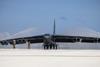
A lone B-52H, equipped with a modernised active electronically scanned array (AESA) radar system was ferried from a Boeing facility in San Antonio, Texas to the air force test centre at Edwards AFB in California on 8 December.
Test pilots from the USAF’s 419th Flight Test Squadron and system test engineers specialising in the B-52H will carry out ground and aerial trials with the aircraft throughout 2026.
The air force says the test campaign will drive a production decision on a fleet-wide B-52H radar modernisation later in the year.
“This radar modernisation ensures that the B-52 will continue to serve as a cornerstone of American airpower well into the future,” says air force secretary Troy Meink, the service’s top civilian official.
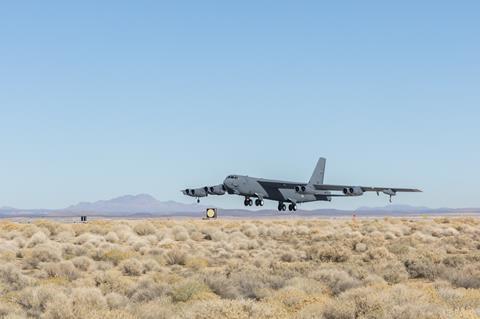
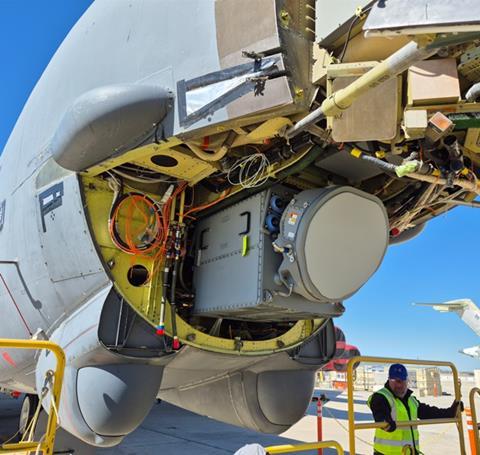
The radar in question is Raytheon’s AN/APQ-188, which is meant to replace the outdated Northrop Grumman AN/APQ-166 mechanically scanned sensor currently installed on the B-52H, which the air force describes as “antiquated and failing”.
The AN/APQ-188 is based on Raytheon’s widely-used AN/APG-79 radar, which equips the Boeing F/A-18E/F Super Hornet and EA-18G Growler electronic attack fighters.
Additional features were also incorporated from Raytheon’s newer APG-82 radar, which is found in the Boeing F-15EX and is available as an upgrade to older F-15Es.
Meink says the sensor upgrade is a crucial improvement to ensure the B-52 can continue operating alongside the new generation of fighters and bombers currently being developed, offering improved targeting and all-weather navigation.
“We are committed to extending the life of this vital platform, allowing it to operate alongside next-generation fighter and bomber aircraft,” Meink adds.
There are currently 76 of the Cold War-era bombers in frontline service with the USAF, according to fleets data from aviation analytics firm Cirium. The fleet has an average of 64 years old.
Despite nearly seven decades of use, the Pentagon plans to keep the B-52 flying for the foreseeable future. Each bomber is already more than twice the age of most of its crew, and air force leaders now openly discuss the prospect of the fleet reaching 100 years of active service.
While the USAF plans to eventually retire its stealthy Northrop B-2 and supersonic Boeing B-1B bombers as Northrop’s next-generation B-21 enters production, the B-52 will keep flying until the 2050s or beyond.
The AESA radar upgrade is one element of the upgrades necessary to keep the B-52H both relevant and serviceable, along with a separate service life extension programme.
The fully modernised B-52 configuration, which is delayed until the 2030s, has been dubbed the B-52J and includes new Rolls-Royce F130 engines, updated communications for both conventional and nuclear missions, new crew compartments and improved avionics.
The USAF also plans to continue integrating new weapons systems into the B-52.
No longer the carpet bomber of the Vietnam War era, modern B-52s are being equipped with long-range precision weapons like the Lockheed Martin AGM-158 Joint Air-to-Surface Standoff Missile (JASSM) and the AGM-181 low-observable nuclear cruise missile.
The B-52’s large bomb bays and massive 31,500kg (70,000lb) payload allows each jet to carry significant quantities of such weapons, which can be air-launched while remaining safely removed from a target.
Those long-range weapons will require a more powerful radar than what the current B-52H offers.
“The B-52 Radar Modernization Program is about more than technology, it’s about readiness, deterrence and the ability to fight and win,” says air force chief of staff General Kenneth Wilsbach.
The four-star general confirms that the improved B-52J will continue to serve in a deterrence and strike role for “decades” to come.

![[Photo4] AESA radar mounted on a platform simulator for ground-based functional and performance testing before flight trials](https://d3lcr32v2pp4l1.cloudfront.net/Pictures/100x67/3/4/5/115345_photo4aesaradarmountedonaplatformsimulatorforgroundbasedfunctionalandperformancetestingbeforeflighttrials_783684.jpg)