









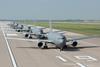

The US Air Force (USAF) plans to significantly expand its fleet of Boeing KC-46 Pegasus aerial refuellers, purchasing dozens more of the 767-based jets.
The air force confirms to FlightGlobal it has approved an acquisition strategy for the KC-46 to include up to 75 additional aircraft. The service has also expanded its existing procurement contract from 179 jets to 188 – the maximum possible figure under that 2011 deal with Boeing.
Those changes make for a total potential fleet of 263 KC-46s in USAF service.
“This KC-46A production extension programme will maintain uninterrupted tanker recapitalisation after final delivery under the current contract,” the air force says.
The decision ends years of uncertainty about the USAF’s medium-term plans for modernising its tanker force, which is primarily composed of aged Boeing KC-135 Stratotankers.

There are more than 370 KC-135s in service with the USAF, with an average age of 64 years old, according to fleets data from aviation analytics firm Cirium. The oldest Stratotankers were delivered nearly 70 years ago.
There are currently just 93 KC-46s flying for the USAF, Cirium says.
While the Pegasus was chosen to replace the KC-135, the air force hopes to field in the longer term a survivable tanker under the Next Generation Air Refuelling System (NGAS) programme.
Plans for that future aircraft remain nebulous, with senior officials suggesting everything from a purpose-built stealthy tanker to a more conventional commercial derivative equipped with sophisticated electronic warfare systems for enhanced protection.
Between the NGAS and the original round of KC-46s, the air force had always planned for a middle tranche of refuelling aircraft, alternatively known as KC-Y and later the “bridge tanker”.
Lockheed Martin had looked to secure that contract, partnering with Airbus to offer the LMXT – a derivative of Airbus’s popular A330-based Multi Role Tanker Transport. However, the US company withdrew its bid in 2023, after air force officials indicated the service would likely drop the bridge tanker project and instead buy more KC-46s from Boeing.
The air force’s decision earlier this month to make that plan official finally resolved the bridge tanker saga.

The outcome is a huge win for Boeing, with billions in potential new revenue.
Fiscal year 2026 budget documents indicate the air force will pay just south of $2.8 billion for 15 KC-46s in the upcoming period. That works out to roughly $186 million per aircraft.
Boeing has struggled for years with design flaws on the KC-46, including issues with the remote operating system for the tanker’s refuelling boom, and with the internal cargo system.
Those issues have generated more than $7 billion in penalty charges for Boeing.
Despite the flaws, which Boeing is working to correct, the KC-46 is flying operationally for the USAF around the globe.
The type played a key role in supporting the Northrop Grumman B-2 stealth bombers that carried out Washington’s long-range strike on nuclear development facilities in Iran last month.