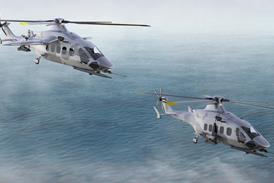
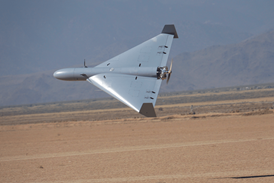














Defence contractor L3Harris and electric aircraft developer Joby are teaming up to develop a new class of military-focused hybrid-electric rotorcraft.

The pair announced the partnership on 1 August, saying they will assess the military potential of an optionally-piloted vertical take-off and landing (VTOL) vehicle designed for low-altitude missions.

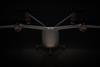
The unnamed concept will be based on Joby’s fully-electric S4 type, but instead powered by a gas turbine hybrid-electric powertrain. The new aircraft is to have capability for both crewed and fully autonomous operations.

Flight testing on the experimental design is expected to start later this year, with operational demonstrations coming in 2026.

“The next generation of vertical-lift technology enables long-range, crewed-uncrewed teaming for a range of missions,” says Jon Rambeau, president of integrated mission systems at L3Harris.

Joby L3Harris Autonomous Hybrid VTOL Announcement

Source: Joby/L3Harris

The partnership between Joby and L3Harris will explore potential for a VTOL-capable hybrid-electric rotorcraft oriented toward military applications

Although primarily focused on the civil market for electric VTOL aircraft, Joby has also worked with the US Air Force (USAF) to deliver test examples of fully electric rotorcraft under the service’s now-defunct Agility Prime programme.

Joby received at least $130 million from the air force over several years to support development of its eVTOL technology, before the service ultimately decided fully electric battery-powered aircraft lack range needed for modern combat operations, particularly in the Indo-Pacific region.

In late 2024, the USAF instead shifted focus to hybrid-electric solutions.

Joby aircraft.jprg

Source: Joby Aviation

Joby’s fully electric S4 is in flight testing

That was seemingly a setback to eVTOL manufacturers, several of which have expressed optimism that military sales can help support the nascent industry while developers pursue commercial certifications.

The pivot to alternative propulsion solutions is likely an attempt to revive prospects for defence business.

“We have worked closely with the [US] Department of Defense over the past decade to give them a front row seat to the development of our dual-purpose technologies, and we’re now ready to demonstrate and deploy it,” says JoeBen Bevirt, Joby’s chief executive.

Joby is now developing a gas turbine hybrid propulsion system to power its S4 aircraft.

The company previously demonstrated the potential of that design to fly with a hydrogen-electric hybrid powerplant, completing a 487nm (902km) flight in 2024.

Military helicopter incumbent Sikorsky has similarly expressed bullishness on hybrid-electric rotorcraft, with general manager Rich Benton telling FlightGlobal that alternative propulsion systems can offer significant improvements to range and cost savings as compared to conventional helicopters.