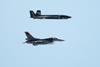












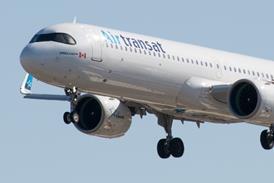

Canada is exploring the potential acquisition of uncrewed combat jets that could be paired with the Royal Canadian Air Force’s (RCAF’s) planned fleet of Lockheed Martin F-35A fighters.
Documents obtained by The Canadian Press indicate the Department of National Defence is researching options for fielding the new class of aircraft, which are alternatively known as autonomous collaborative platforms (ACPs) or collaborative combat aircraft.
Reporting by The Canadian Press indicates Ottawa believes a fleet of ACPs to complement Canada’s planned 88 F-35As could be acquired for around C$16 billion ($11.6 billion).
It is unclear what aircraft Ottawa is assessing for a potential uncrewed fighter programme, which is still in the exploratory stage.
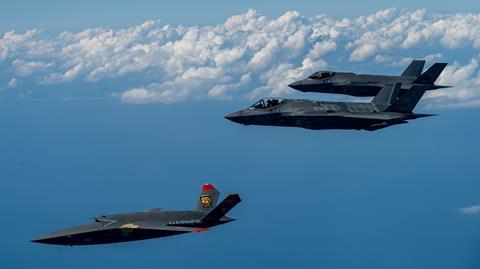
The USA is far and away the leader in ACP development within the Western alliance, with multiple US firms already flying uncrewed jets.
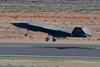
General Atomics Aeronautical Systems has been flying the MQ-20 Avenger for more than 10 years in a technology development role, while the Kratos XQ-58 Valkyrie has been logging flights since 2019, including test programmes with the US Marine Corps and US Air Force (USAF).
The latter hopes soon to make a procurement decision on its first FQ-designated uncrewed fighter under the Collaborative Combat Aircraft (CCA) programme, with large numbers of operational jets in service by the end of this decade.
General Atomics and Anduril are preparing to fly competitive prototypes for the increment one CCA effort in the coming weeks. Both companies tell FlightGlobal their designs will be available to non-US customers, with significant interest being expressed.
Meanwhile, Kratos recently partnered with Airbus Defence & Space to offer a Valkyrie-based solution to the German air force.
Ottawa could alternatively pursue a European ACP design, although options there are significantly less mature than offerings from the USA.
French airframer Dassault Aviation flew an uncrewed flying-wing demonstrator called Neuron last decade, and plans to develop a larger, stealthy successor in the coming years. However, that capability is not expected to be operational until 2033.
British defence manufacturer BAE Systems also plans to fly an ACP demonstrator in 2026, with that programme aimed at supporting the sixth-generation Tempest fighter.
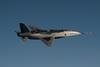
Turkish defence firms arguably have the most advanced uncrewed jet programmes in Europe, including the TAI Anka III flying-wing and Baykar Kizilelma, both of which are already flying.
Alternatively, Canada could seek a partnership to develop its own aircraft domestically. The Royal Australian Air Force pursued that tack, teaming with Boeing to develop the MQ-28 Ghost Bat.
Anduril recently announced a partnership with German arms manufacturer Rheinmetall to offer locally produced and sustained derivatives of its Fury ACP to European customers, potentially creating options for Canada.
Fury is the basis for Anduril’s FYQ-44A, which is a finalist for the first increment of the USAF’s CCA programme.
Such a partnership with a Canadian manufacturer like airframer Bombardier could be plausible. American rotorcraft producer Bell also operates a civil helicopter production site in Mirabel, Quebec.
Canada is in the midst of a generational modernisation effort of its military forces, with plans to spend tens of billions of dollars over decades on new fighters, tankers, uncrewed aircraft, helicopters and maritime patrol jets.
The RCAF’s inflation-adjusted C$27 billion acquisition of 88 F-35A stealth fighters is at the centre of that effort.
That recapitalisation has become uncertain due to deterioration of Canada-US relations since the return of US President Donald Trump, with some Canadian officials now calling on Ottawa to reduce its planned buy of US-made F-35s.
Prime Minister Mark Carney has promised a strategic review of the programme by the end of the North American summer.