











Canadian accident investigators are unable to determine why a Pilatus PC-12’s turboprop failed dramatically during a 7 May flight, prompting the pilots to land the aircraft on sea ice.
The Transportation Safety Board of Canada (TSB) released a report on 2 December saying the failure involved separation of all blades on the second-stage turbine of the aircraft’s Pratt & Whitney Canada PT6A-67B.
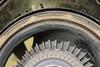
A photograph shows the outer edges of the turbine’s blades sheared off – suffering what investigators call “midspan fractures”.

“The results of the metallurgical analysis showed fracture by tensile overload. The cause of the power turbine blades fracture could not be established,” says the report. The missing blade sections had been ejected through the engine’s exhaust ducts.
Investigations also found “overheat signatures and galling of bearing surfaces at the primary planetary reduction gears in the propeller reduction gearbox”, though they could not determine the cause.
The aircraft was operated by Kudlik Aviation, which did not immediately respond to a request for comment.
During a flight the day prior to the accident, pilots flying the aircraft (registration C-FKGE) heard “an unusual bang”. A maintenance provider later attributed the noise to a bleed valve fault.
The accident happened on 7 May during a flight from Chesterfield Inlet airport to Rankin Inlet airport, both in Canada’s Nunavut territory along Hudson Bay. Two pilots and one passenger were aboard.
Shortly after starting to descend, the “engine emitted a series of bangs with flames appearing from the exhaust ducts following a sharp reduction in power”, the TSB says.
Without engine power, the pilots declared “mayday” and landed at 09:51 “on sea ice” roughly 5nm (9.3km) east of Rankin Inlet. The pilots and passenger were not injured and were rescued by officials on snowmobiles roughly 1h 20min after landing.

“The aircraft’s lower fuselage and trailing edge flaps received some abrasion damage, and several plastic fairings were cracked or broken”, and a section of the bottom aft fuselage was “tore open”, says the TSB.
Manufactured in 2006, the PC-12 had accumulated 13,748h of flight. Its PT6 had been overhauled in February 2020, having since accumulated 4,558h of operation during 2,417 flight cycles.