














Based on cockpit-voice and flight-data recorder information from the Air India Boeing 787-8 that crashed in Ahmedabad on 12 June, India’s civil aviation regulator has released a preliminary report indicating that both of the jet’s fuel cutoff switches flipped to the “cutoff” position shortly after take-off.
The Indian Aircraft Accident Investigation Bureau (AAIB) said in the 11 July report that, in the cockpit voice recording, “one of the pilots is heard asking the other why did he cutoff”.
”The other pilot responded that he did not do so.”

Investigators say the aircraft reached an airspeed of 180kt after take-off, at 08:08:42 local time.
Then, the Engine 1 and Engine 2 fuel cutoff switches transitioned to “cutoff” from “run”, one after another, with a gap of about 1s in between.
Both GE GEnx-1B turbofans began to “decrease from take-off values” as the fuel supply was shut off, the AAIB report says.
As both engines passed below minimum idle speed, the aircraft’s ram air turbine (RAT) extended and began supplying hydraulic power at 08:08:47.
According to flight data, both engines’ fuel cutoff switches then transitioned to “run” from “cutoff”, initiating a full authority dual engine control (FADEC)-controlled engine relight and fuel introduction sequence.
”Engine 1’s core deceleration stopped, reversed and started to progress to recovery,” the report says. ”Engine 2 was able to relight but could not arrest core speed deceleration and reintroduced fuel repeatedly to increase core speed acceleration and recovery.”
One of the pilots issued a frantic “mayday” call at 08:09:05.
Air traffic control “inquired about the call sign”, the report says, but did not hear back from the pilots. It then observed the 787-8 crashing outside of the airport perimeter and activated emergency response.
The twinjet remained aloft for about 30s before striking a medical school, erupting in a massive fireball and killing 241 of 242 people aboard.
Five buildings in the area suffered major structural and fire damage.
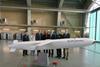
Indian investigators say they recovered both GE turbofans from the wreckage site, which have been quarantined in a hangar at Ahmedabad airport.
“Components of interest for further examinations have been identified and quarantined,” the say.
Notably, investigators say the FAA issued a special airworthiness information bulletin (SAIB) in December 2018 regarding the potential disengagement of the fuel control switch-locking feature on 737-family jets.
“The fuel control switch design, including the locking feature, is similar on various Boeing airplane models”, including Dreamliners, they say. ”As per the information from Air India, the suggested inspections were not carried out as the SAIB was advisory and not mandatory.”
The investigation is ongoing, with involvement from the US National Transportation Safety Board, the FAA, Boeing and GE Aerospace.
Air India says that it is ”working closely with stakeholders, including regulators”, declining to comment on the specifics of the AAIB’s preliminary report.
Story edited to include Air India’s comment.