
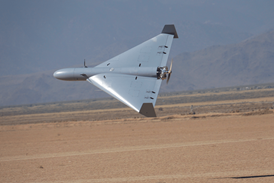














The US Congress is working on a bill that would require the Federal Aviation Administration to deploy technologies intended to protect US airports from threats posed by drones.
Approved 3 September by the House transportation committee, the bill comes amid a broader push by the US government to shield critical US infrastructure and crowded public venues from attack or disruption by “unmanned aircraft systems” (UAS).
Technologies designed to identify and protect against threats posed by such aircraft are called “counter-UAS” systems.

The FAA already receives more than 100 reports monthly about drones operating near airports, and several commercial aircraft have reportedly struck drones in recent years.
The bill now working through the US House would require the FAA to establish an “Office of Counter-USA Activities”, and within 270 days to define “minimum performance requirements” required for counter-drone technologies.
The FAA would need to complete a pilot programme deploying such technologies at up to five large airports. Later, the agency would need to install the counter-drone systems at large- and medium-size US airports and at least three of the USA’s largest cargo-hub airports.
Additionally, the bill would authorise the FAA to use a variety of means to detect and identify drones – including telecommunications – and to control such aircraft remotely.
That provision is important because tracking and controlling drones remotely could run afoul of US “wiretap” laws, some of which limit the government’s ability to intercept telecommunications without court orders, according to a 2022 Department of Justice paper.
“This legislation reauthorises and reforms federal counter-UAS authorities while allowing the national airspace system to remain safe and open to drone innovation,” says Republican senator Sam Graves, chair of the House transportation committee. The bill has support from the committee’s top Democrat.
It aligns with an executive order from president Donald Trump in June that ordered the US Department of Transportation and other federal agencies take steps to protect airports and other critical infrastructure from drone threats.