








Safety investigators, unions and some lawmakers are railing against a spending bill that would grant some military helicopters exemptions from being required to use aircraft-tracking systems intended to prevent midair collisions.
The exemptions are contained in the National Defense Authorization Act (NDAA) – the US military’s annual spending bill – now working through the US Congress.
The bill would exempt military helicopters operating missions deemed important to national security from needing to carry the types of tracking systems used by civilian aircraft. The bill would, however, require a risk assessment be completed.
The move comes amid a separate push to do the opposite – to require that more military helicopters in US airspace use Automatic Dependent Surveillance-Broadcast (ADS-B), a system intended to help prevent midair collisions.

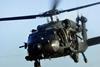
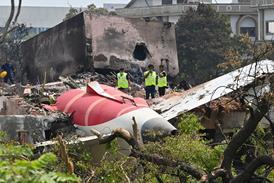
Nearly 11 months ago, on 29 January, a US Army Sikorsky UH-60L Black Hawk helicopter slammed into a PSA Airlines regional jet over the Potomac River, killing 67 people.
The Black Hawk, operating a training mission, was flying higher than permitted and not using ADS-B. It was exempt from the ADS-B requirement under a current FAA regulation applicable to government aircraft operating “sensitive government missions” – a designation government operators themselves define.
In August, several lawmakers proposed the Rotor Act, a bill that would eliminate the exemption for training flights. It has languished in Congress.
But a similar exemption could now become law under the NDAA bill, which passed the US House of Representatives on 10 December and now sits with the Senate for a vote.
It has caused a stir, prompting Republican Senator Ted Cruz, chair of the Senate Commerce Committee, and top committee Democrat Maria Cantwell to file an amendment to strike the helicopter exemption.
“The NDAA protects the status quo, allowing military aircraft to keep flying in DC airspace under different rules and with outdated transmission requirements,” Cruz tweeted on 11 December.
The Air Line Pilots Association, International (ALPA) calls the NDAA’s exemption “wholly inadequate”.
“The bill’s language recreates the conditions that were in place at the time of the Washington National airport midair collision,” ALPA says.
On 10 December, National Transportation Safety Board chair Jennifer Homendy urged senators to “reconsider the consequences of the provision”, calling it “an unacceptable risk to the flying public”.
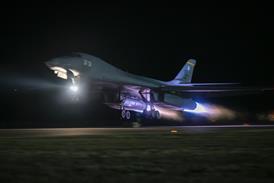
A 2019 law prohibits fighter jets, bombers and other special-mission aircraft from needing to use ADS-B.