











Flanked by a flyover of two Northrop Grumman B-2 stealth bombers, US President Donald Trump signed a gargantuan spending bill into law at the White House on 4 July, coinciding with the annual American Independence Day holiday.
Known officially as the One Big Beautiful Bill Act, the fate of the legislative package captivated Washington for weeks, including a 50-50 tie vote in the US Senate and last minute effort to derail the bill in the House. The US Congressional Budget Office and others have predicted the bill will add trillions to the US national debt, while the White House says it will actually reduce the USA’s debt-to-income ratio.
Although much of the Big Beautiful Bill was focused on domestic policy, the legislation contains a significant amount of funding for priority defence projects, including more than $8 billion for supporting air superiority efforts.
That torrent of spending will help keep existing fighter aircraft in service, increase the procurement of some active production models (though notably not the Lockheed Martin F-35), and accelerate development of next-generation combat aircraft.
One of the largest single line items in the budget plan is an additional $3.1 billion to purchase additional Boeing F-15EX fighters through 2029. Pentagon officials tell FlightGlobal the fleet target for the Eagle II is now 129 aircraft – a roughly 25% increase.
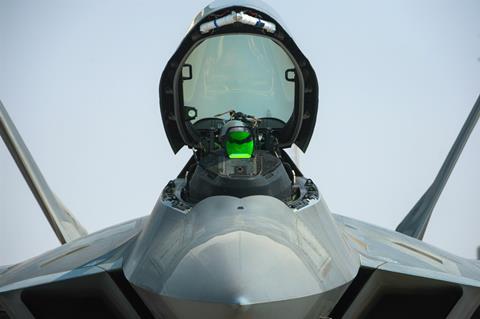
The US Air Force (USAF) will also spend nearly $500 million to stave off the retirement of legacy F-15E and stealthy Lockheed F-22 air superiority fighters.
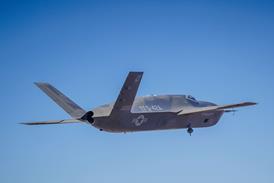
Future air combat platforms were some of the biggest winners under the Big Beautiful Bill, including the US Navy’s (USN’s) precarious F/A-XX next-generation fighter.
Administration officials had recently indicated they planned to minimally fund development of that carrier-based jet in the coming years, but Congress approved three-quarters of a billion dollars in financial support for the programme through 2029.
An additional $400 million will be made available during the same period to accelerate Boeing’s effort to develop the sixth-generation fighter known as the F-47. The USAF already pledged some $20 billion to that programme in March when Boeing was selected as the winner.
The Trump Administration reaffirmed its commitment to that project in June, revealing plans to spend $3.5 billion on the F-47 next year. Officials describe that as a strategic decision to go “all in” on the advanced fighter.
The uncrewed and autonomous aircraft that will operate alongside those future fighters are also getting a funding boost.
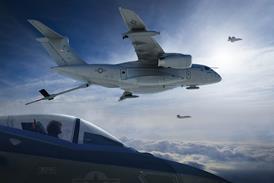
Boeing will receive an extra $100 million to accelerate production of the MQ-25 unmanned refueller. The company recently delivered the first example of that carrier-capable jet to the USN for ground testing, with a first flight planned for later this year.
The air force’s Collaborative Combat Aircraft programme will receive an additional $678 million to accelerate delivery of the first autonomous fighter jet. Competitors Anduril and General Atomics Aeronautical Systems plan to fly their YFQ-series prototypes for the first time in the coming weeks.
Also included in the spending package is $600 million for the “development, procurement, and integration of air force long-range strike aircraft” – presumably the Northrop B-21, which is currently in flight testing.
Interestingly, $500 million is appropriated for the development of a similar long-range strike aircraft for the USN. The navy has not operated a dedicated ground attack aircraft since the retirement of the Grumman A-6 Intruder. Development of a successor – the McDonnell Douglas A-12 – was cancelled in the 1980s.
Support aircraft are also getting a boost, with more than $900 million going to increase production of the Lockheed C-130J transport and the Gulfstream G550-based L3Harris EA-37B electronic warfare platform.
Existing aircraft will also get upgrades funded under the spending plan, including accelerating nacelle improvements and safety upgrades on the Bell-Boeing V-22 tiltrotor and fielding electronic warfare capability to the Lockheed F-16 fleet.
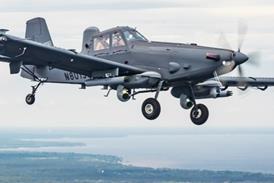
The US Coast Guard is getting a substantial infusion of resources to support its aviation modernisation efforts, with some $3.5 billion going to purchase new rotary-wing, fixed-wing, and long-range uncrewed aircraft under the administration’s border security initiative.
Elsewhere, the chairman of India’s Hindustan Aeronautics sat down with FlightGlobal for a wide-ranging interview to discuss plans for upgrading New Delhi’s fleet of Sukhoi Su-30MKI interceptors and a number of key new development efforts, including the Tejas Mk2 Light Combat Aircraft and the uncrewed Combat Air Teaming System Warrior.
In Europe, Aerlis announced Glasgow Prestwick airport as the proposed final assembly site for the UK company’s new jet trainer, while France detailed its major increase in defence spending that will include early development work of a new F5 standard for the Dassault Aviation Rafale fighter.
Find those stories and much more on the defence landing page at FlightGlobal.com.