











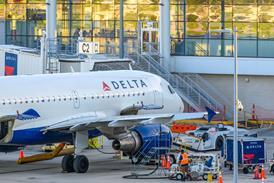
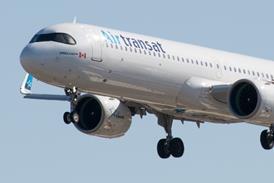
Lufthansa Group is committing to upgrading over 130 Airbus A320-family jets with the advanced navigation system already being delivered on new-build A320neos in its fleet.
The company opted last year to take the FANS-C technology on new aircraft, which is intended to support trajectory-based operations through a version of ADS-C known as Extended Projected Profile, or EPP.
It will provide the capability to transmit real-time 4D flightpath information from the flight-management system to air traffic control. This enables the aircraft to adapt its routes and operate more efficiently, reducing fuel burn.
“Based on this more precise information about the [extended] flightpath of an aircraft, air traffic control can manage airspace more efficiently and optimise the aircraft’s route,” states Lufthansa Group.
It says it will retrofit 134 Airbus aircraft with FANS-C from next year.
While there is a requirement for new-build aircraft to be delivered with the technology from 2028, the company says the retrofit of older jets is the “next logical step” for the fleet.

“With the complete retrofitting of its existing A320 aircraft, the Lufthansa Group is exceeding legal requirements,” it adds, pointing out that it will have nearly 200 compatible aircraft in 2028.
Lufthansa Group is engaged in co-operation to expand the use of the technology across European airspace, including trials in French airspace. It is already used for air traffic in the Maastricht upper airspace region.
“Retrofitting of our Airbus A320 fleet is a strong sign of innovation and responsibility,” says Lufthansa Group chief technology officer Grazia Vittadini.
“Only if all partners in the industry make their systems fit for the future in time will Europe soon be able to benefit from a better-connected and more sustainable airspace.”
Airbus delivered the first A320-family jet equipped with FANS-C to budget airline EasyJet in 2019; the carrier was part of a broad trial programme involving six other airlines.
EasyJet revealed in August this year that it had completed the retrofit of FANS-C on 54 aircraft, and was still taking delivery of new-build airframes with the technology installed.
It claimed that the capability had saved 334t of fuel from Maastricht operations since 2019.
“Technologies like FANS-C are not only essential for the modernisation of airspace, they will be critical in helping deliver meaningful reductions in fuel, carbon emissions and noise pollution,” says chief operating officer David Morgan.
“To maximise the potential of these technologies, it’s critical that airspace reform is finally delivered, and this means more direct routes to help reduce congestion and delays.”