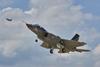














Boeing B-1B Lancer bombers from the US Air Force (USAF) conducted strikes inside Iranian airspace, as the Trump Administration’s war against the Islamic Republic widens.
US Central Command (CENTCOM), which oversees Middle East operations for the Pentagon, confirmed the Lancer sortie on 2 March.
“Last night, US B-1 bombers struck deep inside Iran to degrade Iranian ballistic missile capabilities,” CENTCOM says.
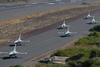
Video footage accompanying the announcement shows several of the four-engined, jet-powered B-1Bs taking off from an undisclosed location at night. Each of the supersonic heavy bombers carries a payload of 34,020kg (75,000lb) – equivalent to 84 of the USAF’s Mk82 226kg (500lb) general purpose bombs or 15 GBU-38 Joint Direct Attack Munition guided bombs.
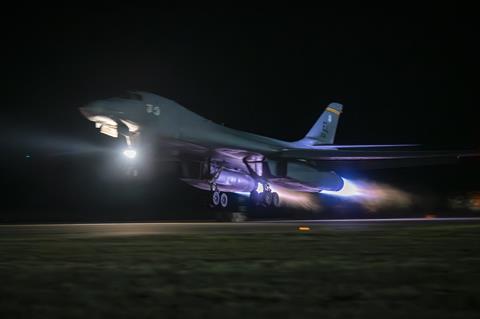
The USAF’s B-1B squadrons specialise in ultra-long range, transcontinental strike missions. In 2024, one Lancer sortie flew nonstop from Dyess AFB in Texas to Syria for a combat mission.
When announcing the start of the latest combat operation on 28 February, US President Donald Trump promised specifically to target Iran’s missile production infrastructure, which was targeted during the latest B-1B strikes.
“We’re going to destroy their missiles and raze their missile industry to the ground,” Trump said.
More than 1,200 sites inside Iran have been targeted during the first three days of the war, according to CENTCOM. Israel has joined the US campaign, which included a so-called decapitation strike that killed Iran’s supreme leader Ali Khamenei.
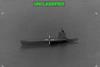
Iranian ships in the Gulf of Oman have also been struck. CENTCOM claims 11 of Iran’s vessels in that waterway between the Indian Ocean and Strait of Hormuz have been sunk or rendered inoperable.
The US headquarters separately denied claims that Iran’s Islamic Revolutionary Guard Corps had successfully struck one of the two US aircraft carriers operating in the region.
Four US military personnel in Kuwait have been killed by retaliatory missile and drones attacks launched by Iran.
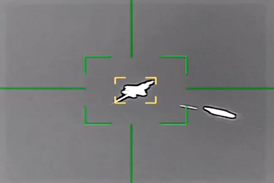
Separately, three USAF Boeing F-15Es were shot down by Kuwaiti ground-based air defences in an apparent friendly fire incident.
All six crew aboard the three fighters ejected safely and have been recovered.
Video is circulating on social media showing several of the pilots clad in flight gear being met on the ground by civilians.
Top US officials are warning the public to expect more American casualties, as the Trump administration presses ahead on its war aims — which include permanently ending Iran’s efforts to produce a nuclear weapon.
“We expect to take additional losses,” said General Dan Caine, chairman of the Joint Chiefs of Staff, on 2 March. “As always, we will work to minimise US losses, but… this is major combat operations.”
Trump has said he will never allow Iran to possess nuclear weapons, after previously claiming to have “completely and totally obliterated” the country’s nuclear enrichment facilities last year with a long-range strike mission using Northrop Grumman B-2 stealth bombers.
That sortie, known as Operation Midnight Hammer, saw Tomahawk cruise missiles and special bunker-busting bombs dropped on three nuclear sites around Iran.
Trump says the current campaign, which the Pentagon has named Operation Epic Fury, could last three to four weeks.
The war has created friction between the US and its allies.
The UK temporarily denied the Pentagon permission to use the air base at Diego Garcia for the ongoing operation, before later reversing course.
On 2 March, more than a dozen US military aircraft departed Spain after Madrid revoked permission to use two Spanish air bases as part of the widening war with Iran.