











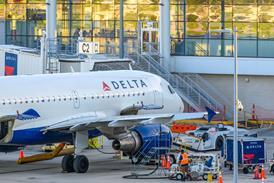
IndiGo returned two-thirds of its damp-leased narrowbodies over the past quarter as groundings of its Pratt & Whitney PW1100G-powed A320neo-family jets trended significantly below the peak mid-70s level reached last year.
Outlining its fiscal first quarter earnings on 30 July, the Indian low-cost carrier said aircraft numbering in the 40s are currently grounded by the P&W issue, in line with guidance released earlier this year. That lower total enabled the airline to return 15 damp-leased narrowbody aircraft – where cockpit crew are supplied by the lessor but the lessee provides its own cabin crew – during the quarter.

That meant IndiGo ended June with two damp-leased A320ceo jets – versus 14 at the end of March – and six damp-leased Boeing 737-family jets – versus nine at the end of March, as it prepared to enter the seasonally weak second quarter.
Alongside reflecting IndiGo having fewer aircraft on the ground, the reduction in damp-leases is also being driven by it receiving new Airbus jets at a rate of around one per week, according to chief executive Pieter Elbers, who cites the unit-cost benefit of no longer relying so heavily on external capacity providers.
Nevertheless, as the P&W groundings continue, the airline says it retains the option to add more narrowbody damp leases, should the coming peak third and fourth quarters warrant the extra capacity.
Much of the decision on extra narrowbody capacity will be informed by the demand and yield recovery from a challenging fiscal first quarter for the carrier, when a 13.5% rise in passenger traffic was outpaced by 16.4% capacity growth, amid impacts from geopolitical tensions and the Air India 787 crash in June.
Meanwhile, the airline’s short-term leased widebody fleet will be boosted across the rest of the year as it takes on four more Boeing 787-9s from Norse Atlantic Airways, to add to the single example in its roster today. It also has two high-density Boeing 777s on lease from Turkish Airlines.
IndiGo reported a profit after tax of Rs21.8 billion ($249 million) for the April-June period, down from Rs27.3 billion a year earlier, on a 6.4% rise in revenue to Rs215 billion.
It ended the first quarter with a fleet of 418 aircraft, down from 434 at the end of March, but still up from 382 a year earlier.