






One of the multiple papers on the environment submitted to the triennial ICAO Assembly, which commences towards the end of September, underlines the potential impact of climate change on aviation safety.
Put forward by South Korean representatives, it proposes the explicit inclusion of climate-related operational safety risks in future editions of ICAO’s Global Aviation Safety Plan.
“As climate change leads to more frequent and severe meteorological and environmental phenomena,” says the paper, “it might be regarded as a critical factor and incorporated as a key consideration in the development of many [countries in their national safety plans].”
It highlights several specific concerns, including increased turbulence events from atmospheric instability, particularly on long-haul and transoceanic routes.
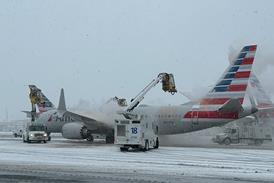
High temperatures affect aircraft take-off and climb performance while more convective weather intensifies storms and reduces the predictability of in-flight and ground icing conditions. The paper also mentions shifts in bird migration and the risks of airport infrastructure disruption from flooding.
“There may be other impacts of climate change on aviation safety that have not yet been fully identified,” it adds.
Such concerns have been the subject of a UK study by the University of Reading, which has used climate modelling to explore the effects of higher temperatures on atmospheric stability.
Aircraft at cruise altitudes will face an increased risk of windshear and turbulence, it concludes.
Another form of atmospheric disturbance – the familiar criss-cross pattern of contrails left by aircraft engines – is also undergoing considerable scrutiny in order to understand their formation and their effect on the environment.
Contrails are considered to contribute to the non-carbon dioxide impact from aviation, but the magnitude is uncertain.
Working papers to the ICAO Assembly include detailed updates on environmental protection, cleaner energy frameworks, and the carbon-offset scheme CORSIA. They also touch on environmental considerations for advanced future air transport, such as the development of supersonic aircraft.