














Airlines and their passengers look set for an increasingly bumpy ride in future as climate change makes the atmosphere less stable and raises the risk of clear-air turbulence, new research suggests.
Clear-air turbulence is problematic for operators as it is much harder to forecast accurately, and thus avoid, than convective or mountain-wave turbulence.
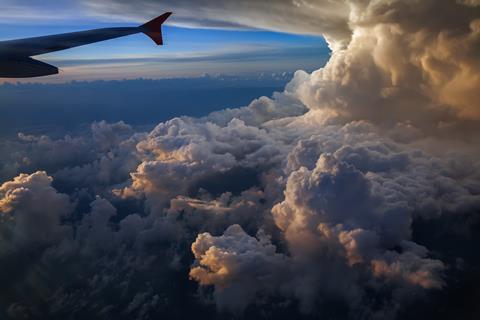
In extreme cases, passengers or crew without their seatbelts fastened have been badly injured during unexpected turbulence events.
And the new study from the University of Reading in the UK – Future Trends in Upper-Atmospheric Shear Instability from Climate Change – suggests the problem is only going to get worse as the atmosphere warms.
Using 26 of the latest global climate models, the research, published in the Journal of the Atmospheric Sciences, analysed how warming temperatures affect jet streams at typical aircraft cruising altitudes of around 35,000ft.
It found that windshear will increase by 16-27%, and the atmosphere will become 10-20% less stable from 2015 to 2100.
“Increased windshear and reduced stability work together to create favourable conditions for clear-air turbulence,” says Joana Medeiros, PhD researcher at the University of Reading and the study’s lead author.
Increased atmospheric instability is already evident, she says, pointing to earlier research that showed vertical windshear had increased by 17% over the past 40 years.
Although both the northern and southern hemispheres will face greater instability, this is not evenly distributed. “Both hemispheres will not change at the same rate,” says Medeiros.
Under the worst-case scenario analysed, vertical windshear in northern hemisphere mid-latitudes will rise by 34%, while the increase in southern hemisphere mid-latitudes is 27%, the research shows.
The paper does not address the likely increase in frequency or severity of clear-air turbulence events, but a follow-on study covering those topics is due before year-end, Medeiros says.
Forecasting accuracy has improved over the last four decades to the current figure of around 70% “but there is still work to be done”, she says, adding: ”Ultimately the goal of anyone working with clear-air turbulence would be to accurately forecast it.”
This data could then be passed to airlines or air navigation service providers, allowing aircraft to better avoid likely high-risk areas.