






The head of air mobility for the US Air Force (USAF) says the service is eyeing the mid-2040s to field a new strategic airlifter.

The still-conceptual transport is envisioned as succeeding both the Boeing C-17 Globemaster III and Lockheed Martin C-5M Super Galaxy.

“The C-17 and C-5 have served us well for decades, but they’re not going to fly forever, and so we’d like to recapitalise those on our timeline,” says General John Lamontagne, chief of Air Mobility Command (AMC).

Lamontagne spoke to FlightGlobal on 22 September at the annual Air & Space Forces Association conference outside Washington, DC.

“We’d like to have a plan in place so [that] when the service life starts to erode on the C-17, whether it’s wings, engines or more, we’ve got a competition already going,” Lamontagne adds.

Although plans are still in early stages, the four-star general and C-17 pilot expects a source selection on a new strategic airlifter could come in the mid-2040s.

C-17

Source: US Air Force

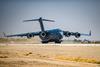
A replacement for both the Boeing C-17 Globemaster III (pictured) and Lockheed Martin C-5M Galaxy strategic transports could be coming in the 2040s

An assessment is still ongoing to determine what attributes a new airlifter would need to replace C-5Ms and C-17s, with Lamontagne describing the latter as the “workhorse of the fleet”.

“Anytime we need to go do something in a hurry, if it’s not air-refuelling centric, the C-17 is at the front of that,” he says.

C-5Ms, with 127,460kg (281,000lb) payload, played a central role in US military operations throughout the Middle East over the past year, supporting a surge of heavy assets like Patriot air defence batteries to the region.

Lamontagne says the AMC will be looking at a range of attributes when firming up plans for a new strategic airlifter, including desired levels of defensive survivability, tactical agility and ease of sustainment.

Lamontagne would like an aircraft capable of rapid refuelling on the ground, where aircraft and crews are vulnerable to attack.

The AMC commander says the current goal is to produce a formal analysis of alternatives for the Next Generation Airlift need in the “next couple of years”. That phase of the procurement process sets the stage for a formal solicitation to industry for solutions.

Interestingly, one alternative could be re-starting C-17 production, which Lamontagne says is being discussed but not currently pursued. 

”There are no current plans to restart the C-17, [but] a lot of discussion about it,” Lamontagne says.

“One step at a time,” he adds. “Capabilities-based assessment, analysis of alternatives, competition.”

Separately, an effort is underway called the Next Generation Intra-theatre Airlift (NGIA), which aims to enhance the USAF’s airlift capacity with an “intra-theatre platform that can fight through damaged infrastructure on responsive timelines”.

A request for information posted by the Air Force Research Laboratory in late 2024 says the NGIA aircraft is envisioned as a contested logistics platform, with delivery of a prototype expected in the early 2030s.

Specific features listed include airlift capability, speed, range, survivability in contested environments and “attributes for agility in the objective area”.

As its name implies, the NGIA would be an “intra-theatre” platform, meaning it would likely only need to operate over regional distances, rather than the inter-continental capability of long-range lifters like C-5Ms and C-17s.