













The scope of the US aviation sector’s next radio altimeter headache has come into view – and the pain could be much worse than last time around.

Due to potential interference from new 5G wireless networks, US operators are faced with replacing or upgrading radio altimeters – perhaps some 58,600 units – on their aircraft in the coming years, according to a Federal Aviation Administration (FAA) notice of proposed rulemaking (NPRM) released on 5 January.

The cost: at least $4.5 billion.

FlightGlobal on 5 January reported that the FAA had issued the proposal, a nearly 100-page document describing a sweeping solution the agency says is critical to preventing altimeters and other avionics from going haywire due to “spurious” cellular signals.

FCC letter from IAI, A4A, CTIA

Source: FCC

US aerospace and wireless groups are working on other solutions, including “virtual” no-fly cylinders around 5G antennas

The FAA’s proposal makes clear the agency is fully convinced 5G poses real risks, despite previous assertions to the contrary by the wireless industry.

“Radio altimeters are critical safety equipment that measure an aircraft’s height above terrain and obstacles, providing accurate altitude readings to pilots and aircraft safety systems. Wireless signals in the neighbouring spectrum bands can interfere with radio altimeters and cause inaccurate altitude readings,” the agency tells FlightGlobal.

As written, the proposal would apply to altimeters on all aircraft – some 40,000 of them. It would require altimeters “function reliably” when 35ft (10.7m) from wireless antennas and at 500ft altitude or lower. (Although the proposal notes aircraft should never be that close to antennas anyway.)

The FAA plans for the rule to take effect in stages, with Part 121 operators – airlines – needing to comply sometime between 2029 and 2032. Airlines may need to modify or replace 27,400 radio altimeters on 12,500 transport aircraft – including some 8,000 operated by US carriers and 4,500 by foreign airlines. It will cost the airline sector at least $2.2 billion, the FAA estimates.

The FAA intends to give operators of other aircraft – such as charter fleets, general and business aviation types, and helicopters – two additional years to replace or upgrade their roughly 31,800 altimeters on thousands of aircraft, costing at least $2.3 billion.

Those figures are based on 2023 estimates for replacing earlier altimeters and therefore may be inaccurate; the actual cost of upgrading to newer, compliant altimeters “may be greater”, the FAA notes.

The agency is seeking feedback during a 60-day comment period as it finalises the rule. Regulators want to know when manufacturers expect to have updated altimeters certificated and how quickly they can ramp up production, and when aircraft makers expect to incorporate new altimeters into aircraft and achieve amended type certificates.

SIMILAR WAVELENGTHS

5G antenna installation

Source: AT&T

In the coming years, wireless providers plan to begin using a new bandwidth that creates more potential for interference, the FAA says

It is possible the aviation industry could have help footing the bill, but such aid is far from certain. In a November 2025 proposed rule, the Federal Communications Commission (FCC) – charged with allocating radio spectrum to wireless providers – mentions the altimeter problem and requests “comment on specific proposals and mechanisms to facilitate these retrofits from a financial perspective”. Such payments could possibly be made to airlines, other operators and manufacturers, it says.

The Aerospace Industries Association says it is ”leading ongoing technical discussions between aviation and telecommunications stakeholders, to include both government and industry, to ensure long-term safe coexistence as 5G technologies continue to innovate.”

“The FAA’s NPRM, as well as the NPRM released by the FCC in late 2025, identify regulatory considerations that will influence new specifications for radios altimeters,” it adds.

Trade group Airlines for America says it is working on solutions and reviewing the proposed rule. 

LOOMING PROBLEM

The FAA’s new altimeter action is the latest move in a saga going back several years.

In 2021, the agency and aircraft operators found themselves scrambling as US wireless companies prepared to roll out new fifth-generation networks by using a new sliver of bandwidth – 3.7-3.98GHz, the ’Lower C-band’. The FAA warned such signals could interfere with altimeters, which use the nearby 4.2-4.4GHz range.

Despite dire predictions of flight disruptions, the wireless and aviation industries came up with temporary solutions that prevented widespread upheaval.

These included wireless providers agreeing to temporarily reduce 5G transmission power near 188 airports. The FAA also limited some operations and issued a 2023 order requiring transport and commuter aircraft – about 8,000 in total – to have “interference tolerant” altimeters.

But at the time, some 7,000 aircraft already had – or were about to have – compliant altimeters, meaning only 1,000 aircraft actually needed modifications to comply with the 2023 rule, at a modest estimated cost of $35 million, the FAA said at the time.

PERSISTENT HEADACHE

The 5G headache is now back with a vengeance, and the aviation industry should not be surprised; the FAA has been clear that the previous solutions were temporary.

To comply with the 2023 rule, altimeters needed to be reliable at those 188 airports where wireless companies were already voluntarily reducing transmission power, documents say.

But the cellular firms have only agreed to cap power through end-2027, meaning they could boost output in 2028.

Also, wireless companies are now preparing to begin using another sliver of spectrum in the 3.98-4.2GHz range, the Upper C-band. Altimeters compliant with the 2023 rule are not tolerant to errant transmissions from that spectrum, the FAA says.

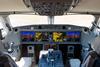
A220 cockpit-c-Airbus

Source: Airbus

The FAA says 5G interference can affect not only altimeters, but numerous systems using altimeter data, including traffic-collision avoidance systems

Since 2020, a committee led by US radio standards group RTCA and European group EUROCAE have been developing new standards to actually solve the problem.

The committee plans to publish those standards in March 2027, though the FAA is urging the body do so in June 2026. Meeting that revised deadline would align with the FAA’s planned publication of its final rule, which it says will conform to those standards.

But the aviation and wireless sectors have tussled over the 5G-altimeter issue for several years; opposing demands are at play, with the need to preserve aviation safety butting against desire to expand bandwidth.

The wireless industry and some US lawmakers insist the USA must boost wireless capabilities to remain globally competitive – and to accommodate data-hungry artificial intelligence. In December, President Donald Trump ordered more bandwidth be available to wireless providers.

“US wireless networks face a looming capacity crisis, risking material degradation in performance with dire implications for the broader economy if new spectrum cannot be made available for 5G,” consulting firm Accenture said in a 2025 report. “The US is in danger of losing its place as a global leader.”

The wireless industry had in prior years insisted 5G poses no safety concerns to aircraft. In 2021, industry trade group CTIA said the aviation industry was “fearmongering”, noting other countries allow 5G transmissions with no problems. Reached by FlightGlobal, CTIA declines to say if it still holds that stance but insists it is working with the aviation sector to find solutions.

There is no doubt on the FAA’s stance though: it identified 118 instances between January 2022 and August 2025 of C-Band transmissions likely interfering with avionics, causing “display errors, including erroneous altitude data and/or nuisance alerts from integrated safety systems”, its proposed rule says.

“These reports demonstrate that wireless signals disrupt [radio] altimeters as predicted,” the FAA adds.

Differences aside, the industries are collaborating.

In September last year, heads of both industries – including representatives from Aerospace Industries Association (AIA), Airlines for America (A4A), Boeing, CTIA, Garmin, Honeywell and RTX – met with the FCC chairman’s staff to review proposed solutions, according to a 2 October letter from trade groups to the FCC.

Those proposals included establishing a “guard band” of unused frequency in the 4.18-4.2MHz range, specifying antenna location and height to ensure sufficient separation from aircraft, and creating “virtual” no-fly cylinders around antennas.

“We also highlighted areas where additional work is ongoing to achieve consensus positions, such as on appropriate out-of-band emission limits… and financial incentives,” the letter says.

FCC letter from IAI, A4A, CTIA

Source: FCC

The “virtual cylinders” proposal would involve ensuring aircraft do not fly in or near antennas, aerospace and broadband trade groups say