















Latvian carrier Air Baltic cut its full-year net loss by 40% in 2025 to €44.3 million ($51.2 million) during a year in which it significantly expanded its wet-lease operations.
The narrowing in losses was achieved on revenue up 4% at €779 million for 2025. Around a fifth of the revenues came from its expanded wet-lease activities, under which an average of 14 aircraft were deployed on ACMI flights during the year.
Air Baltic increased passenger numbers 1% to a new high of 5.2 million across it scheduled network and by 5% to 8.7 million when including ACMI operations.
The carrier says its performance was affected by higher operating costs, yield pressure in the first half of the year and limited aircraft availability due to industry-wide engine maintenance constraints
New Air Baltic chief executive Erno Hilden, who took the helm of the carrier in December, says: “2025 was a challenging year operationally, as the industry continued to face engine maintenance issues that affected aircraft availability and required schedule adjustments.”
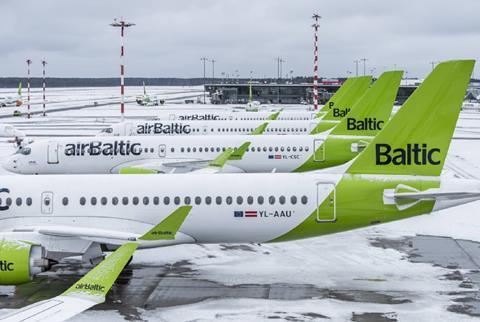
Air Baltic, which operates a fleet of 53 Pratt & Whitney PW1500G-powered Airbus A220-300s, last year cut 19 routes from its planned summer schedule, attributing the decision to delays in engine maintenance.
“Despite these disruptions and continued cost pressures, we saw steady demand for our services and further development across both network and ACMI operations,” adds Hilden. “While external factors continued to affect financial performance, the total result improved compared to the previous year, supported by more favourable operating conditions in the second half.”
The carrier says ticket yields improved during the second half of 2025, supported by efficient capacity deployment, targeted pricing actions, and strengthening demand across core markets.
”We remain focused on improving efficiency and supporting Air Baltic’s long-term financial performance. As fleet availability improves, we will continue to develop our network and ensure reliable connectivity for passengers across the Baltic region,” says Hilden